
AI Agents in Real Estate: Lead Response, Viewings, Listings
AI agents answer the lead, and the broker still sells the home
In real estate, AI agents earn their place in the hours between a lead arriving and a broker picking up the phone. They answer portal and WhatsApp enquiries, ask the qualifying questions, book viewings into the right calendar and keep listing details consistent. The advice, the negotiation and the relationship stay with the licensed agent, which is also the part buyers keep paying for.
Buyers have not stopped using people. In the National Association of Realtors 2025 Profile of Home Buyers and Sellers, 88% of buyers used an agent or broker and 91% of sellers did, and 91% of buyers said they would use their agent again or recommend them. So the job for software here is to start more of those conversations on time, not to take them over.
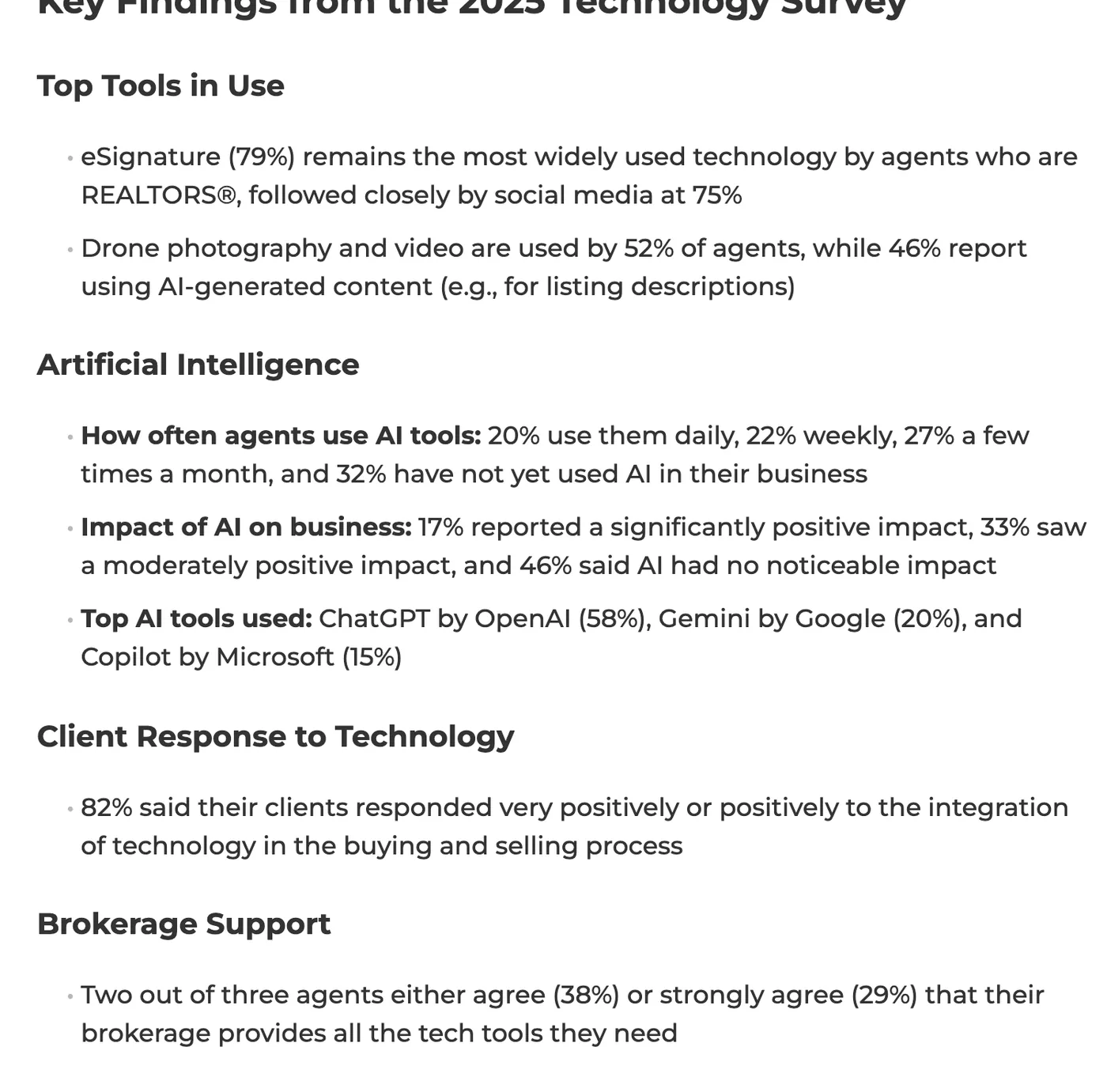
Most of the AI that brokers use today writes rather than talks. NAR's 2025 Technology Survey found that 20% of Realtors use AI tools daily, 22% weekly, 27% a few times a month and 32% not at all, and 46% use AI generated content such as listing descriptions. In the same survey, 46% said AI had no noticeable impact on their business, against 17% who saw a significantly positive one.
Our reading of those numbers is that a faster way to write a listing does little on its own. What changes a brokerage's results is the conversation with the lead, and that is where an agent built for the job, rather than a chat window a broker types into, makes the difference.
If portal and WhatsApp leads wait until the morning for a reply, we can map an agent that answers and books viewings tonight. Book a call with GenovaFlow AI
Lead response means answering in minutes and qualifying in the same conversation
Portal enquiries and WhatsApp messages arrive in the evening and at weekends, when brokers are at viewings or asleep. An agent answers in the channel the lead used, asks the questions your team would ask (area, budget, timing, cash or mortgage, viewing availability), suggests matching listings from your current stock, and writes the answers into the CRM so the broker opens a qualified lead the next morning instead of a bare phone number.
Dubai brokerages in particular get enquiries in many languages from buyers in other time zones, which fits the pattern we described in multilingual WhatsApp agents and after hours bookings. The same agent can run on the web chat and the portal inbox, so a buyer who starts on Instagram and continues on WhatsApp is still one conversation in your system.
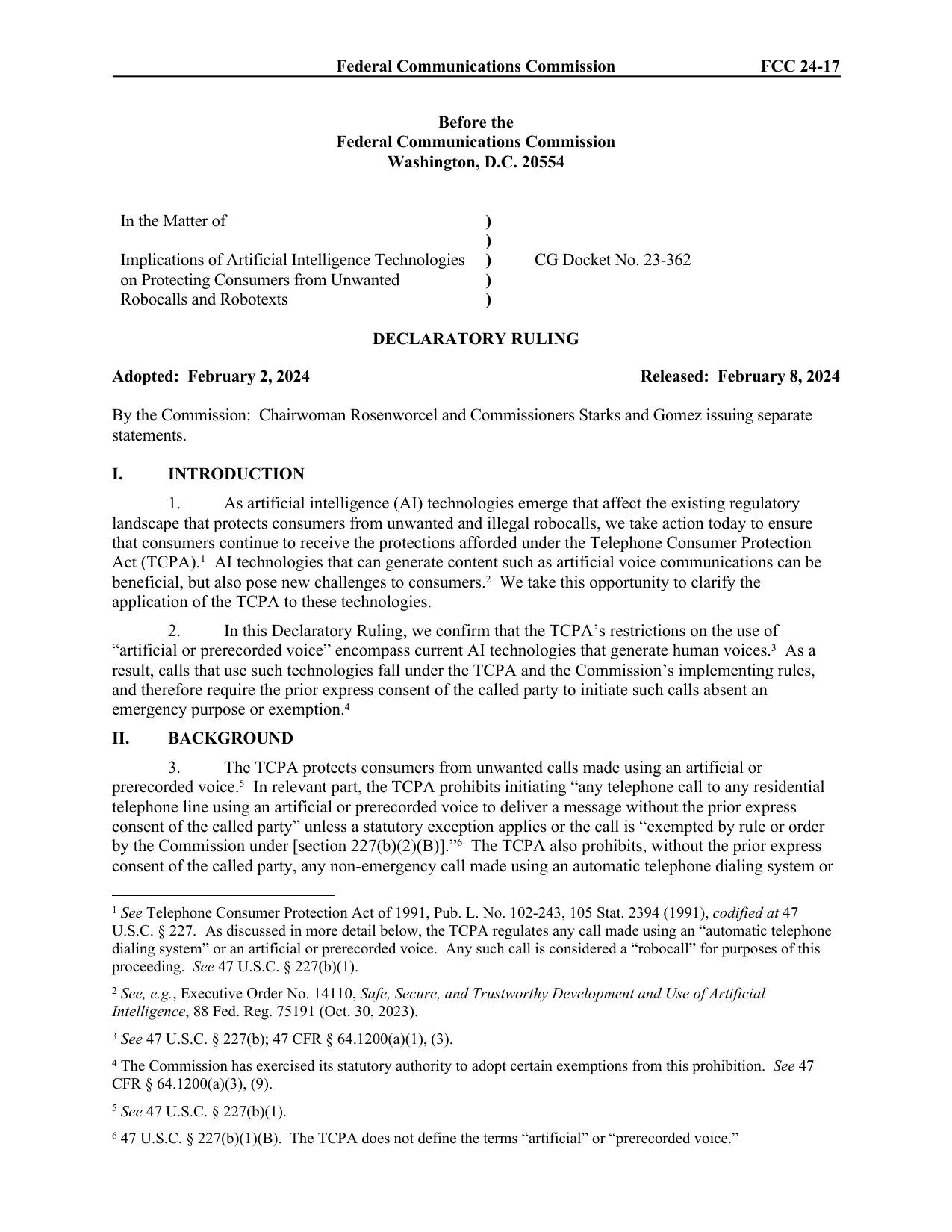
Calling leads back with an AI voice is a different matter in the United States. In February 2024 the Federal Communications Commission ruled that the Telephone Consumer Protection Act's restrictions on an "artificial or prerecorded voice" cover current AI technologies that generate human voices, so callers need the called party's prior express consent before placing such a call, and prior express written consent when the call is telemarketing. The practical rule is simple: an AI voice calls back only the leads who asked for a call and gave consent on your form, and anyone who says stop is never called again.
Viewings are booked, confirmed and moved without a broker on the phone
Once a lead is qualified, the agent books the viewing straight into the broker's calendar, leaving travel time between properties that you set once. It sends the confirmation with the address and a map pin, a reminder on the morning of the viewing, and handles the "can we make it 6 instead" message without anyone in the office getting involved.
The agent stops where judgement starts. Questions about what the seller would accept, what a clause in the contract means or whether a property suits a family's plans go to the broker, with the conversation attached so the buyer never repeats themselves. We set out how to draw those lines in when an AI agent should hand off to a human. For the leads who go quiet after a viewing, a polite follow up sequence is the job of an outreach agent, which stops the moment someone replies.
Listings can be drafted by AI, but a person signs them off
Drafting listing descriptions is already the most common AI task in the industry, and it carries two risks. The first is invented detail: a model asked to make a flat sound appealing will add a sea view or a size the data never mentioned, so the agent should write only from the fields in your listing system and a person should approve every description before it goes out. The second is wording. In the United States the Fair Housing Act prohibits discrimination because of race or color, religion, sex, national origin, familial status or disability, so neither the listing copy nor the agent's qualifying questions should touch any of those.
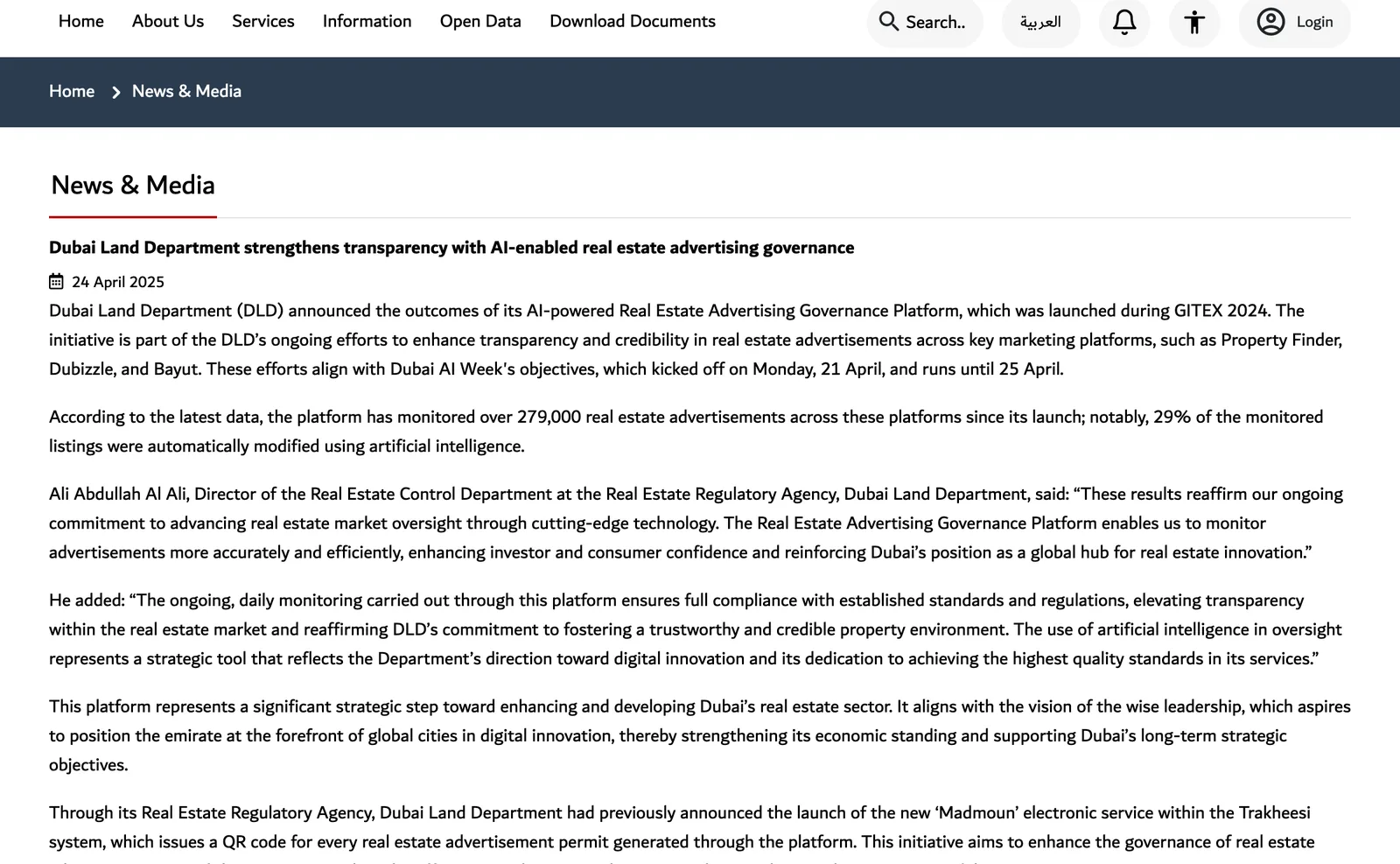
In Dubai the rules are about permits. The Dubai Land Department's Real Estate Ad Permit is issued through the Trakheesi system, covers SMS, electronic advertisements and real estate promotion platforms among its activity types, and asks brokers for the marketing contract with the property owner; the listed service time is 1 working day. DLD also requires a QR code from its Madmoun service on every real estate advertisement, so buyers can check that an ad is approved.
The regulator is using AI on its side too. DLD reported that its advertising governance platform had monitored over 279,000 ads on Property Finder, Dubizzle and Bayut since its launch at GITEX 2024, and that 29% of the monitored listings were automatically modified. An agent that publishes listings, or sends them out as SMS or online ads, has to carry the permit number and QR code every time.
Six checks before you put an agent on your leads
These are the questions to settle with any vendor, ours included, before the agent answers its first lead.
- Which channels it answers (portal inbox, WhatsApp, web chat, phone) and where every conversation is logged.
- The qualifying questions, written down, with none that touch a protected characteristic.
- Consent captured on the form before any AI voice callback, and a stop request honoured on every channel.
- Listing facts pulled from your listing system, never generated, with a person approving each published description.
- In Dubai, the Trakheesi permit number and QR code on every advertisement the agent publishes or sends.
- Handoff rules for price, contracts and complaints, with the full conversation passed to the broker.
If phone calls are your bottleneck, the numbers in AI voice agent vs a human receptionist apply to a brokerage front desk as well, and GenovaFlow's voice agents and chat agents are built for exactly this lead to viewing path. The same approach for a clinic is in AI agents in healthcare, and the rest of the series is in the AI agents for business category.
Questions people ask
Can AI replace real estate agents?
Not on the evidence so far. In NAR's 2025 Profile of Home Buyers and Sellers, 88% of buyers and 91% of sellers used an agent. What AI agents replace is the waiting: answering enquiries out of hours, qualifying leads, booking and confirming viewings, so the licensed agent spends time on advice and negotiation.
How is AI used in real estate today?
Mostly for writing. NAR's 2025 Technology Survey found 46% of Realtors use AI generated content, such as listing descriptions, and ChatGPT was the most used tool. Brokerages that go further use AI agents to answer portal and WhatsApp leads, qualify them, book viewings and update the CRM.
Do you need consent to call leads with an AI voice agent?
In the United States, yes. The FCC ruled in February 2024 that AI generated voices count as an artificial voice under the TCPA, so calls using them need the called party's prior express consent, and written consent for telemarketing. Capture consent on your enquiry form and honour every stop request.
Do real estate ads in Dubai need a permit if AI wrote them?
The permit rules do not depend on who wrote the ad. Real estate advertisements in Dubai need a Real Estate Ad Permit through Trakheesi, and DLD requires the Madmoun QR code on every advertisement. An AI agent that publishes or sends listings must include both.
Sources
- First time home buyer share falls to historic low of 21%, median age rises to 40, National Association of Realtors
- Realtors embrace AI, digital tools to enhance client service, NAR survey finds, National Association of Realtors
- Declaratory Ruling FCC 24-17, AI technologies and unwanted robocalls, Federal Communications Commission
- The Fair Housing Act, U.S. Department of Justice Civil Rights Division
- Real Estate Ad Permit, Dubai Land Department
- Dubai Land Department strengthens transparency with AI enabled real estate advertising governance, Dubai Land Department
Keep reading
How multilingual WhatsApp agents capture after hours bookings
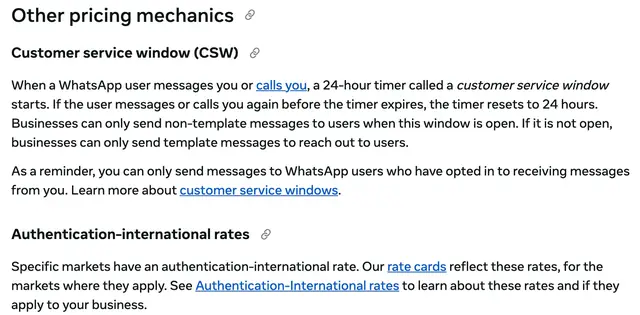
A WhatsApp agent can answer a 1am booking request in the guest's own language. How Meta's 24 hour window, templates and pricing shape that agent.
Read the post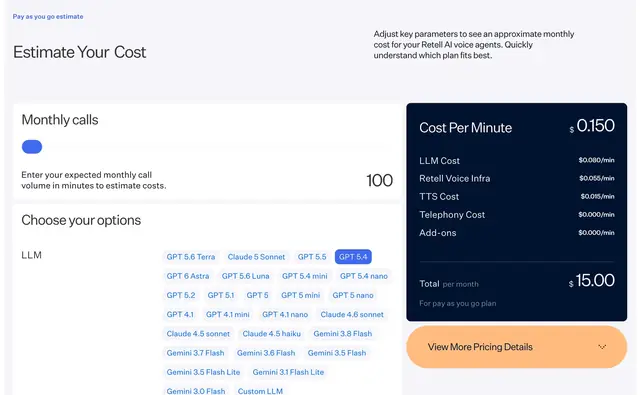
AI voice agent vs a human receptionist: the cost math
A US receptionist costs about $55,330 a year with benefits; a voice agent bills $0.14 to $0.17 a minute. The math, with every input linked to its source.
Read the post
When should an AI agent hand off to a human?
Hand off when the agent keeps failing, when an action is risky or cannot be undone, or when the customer asks. What OpenAI, Anthropic and vendors say.
Read the post