
AI voice agent vs a human receptionist: the cost math
A voice agent costs cents a minute, a receptionist costs a salary
A full time receptionist in the US costs an employer about $55,330 a year once benefits are added to the $38,010 median wage, and covers 40 of the week's 168 hours. A voice agent on published platform prices costs about $0.14 to $0.17 per minute of conversation. Below is the math with every input linked, and what the agent still cannot do.
The two are not the same purchase. A receptionist is paid to be available, whether the phone rings twice an hour or twenty times. A voice agent is paid for the minutes it talks, and it answers at 3am, on a Sunday and while the first call is still going. So the honest comparison is not salary against invoice. It is what each one costs for the calls you actually get, and what happens to the calls nobody is there to pick up.
If your phone rings when nobody can answer it, we can price a voice agent on your own call volume. Book a call with GenovaFlow AI
A receptionist costs about $55,330 a year with benefits
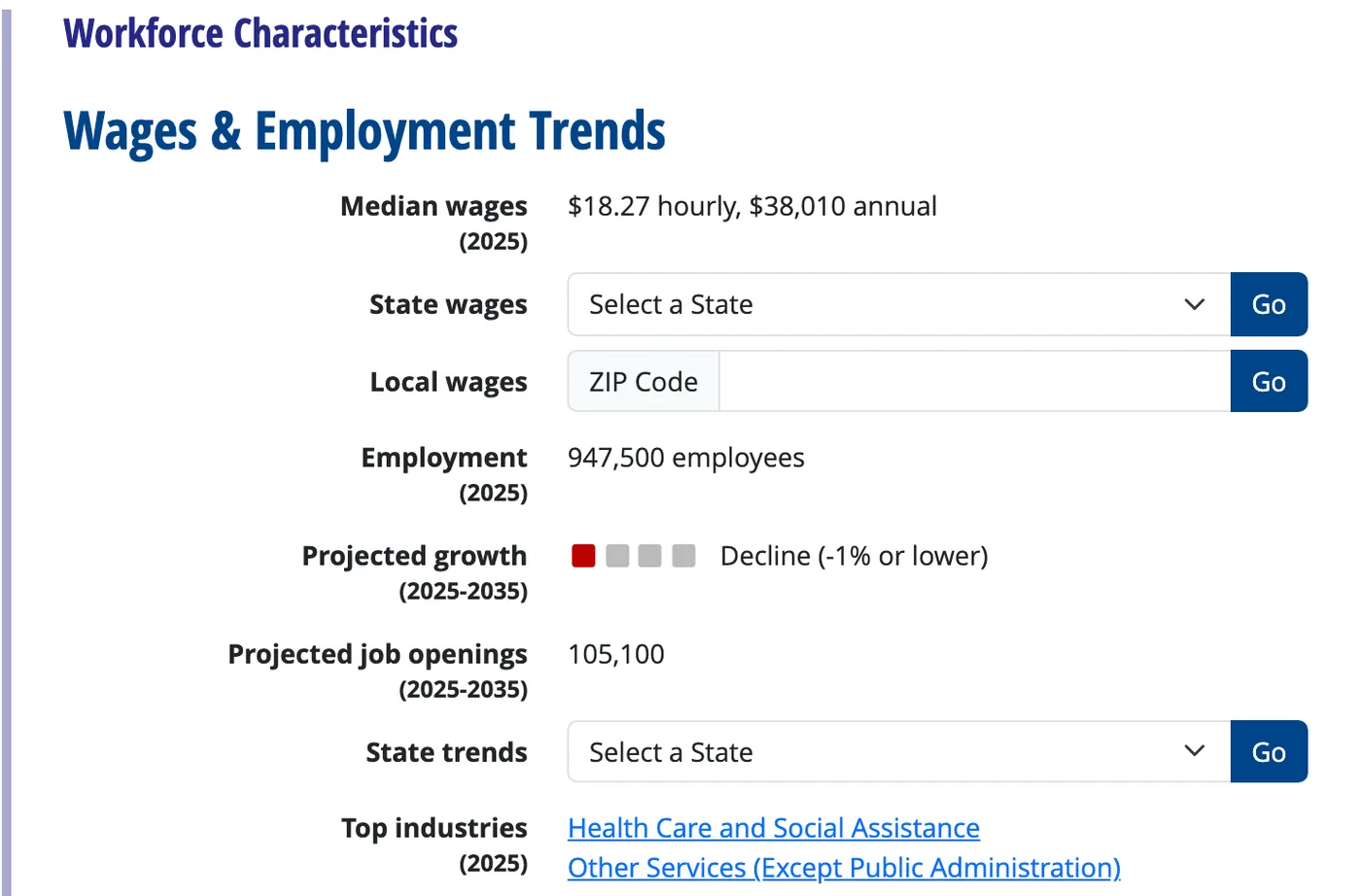
The Bureau of Labor Statistics puts the median pay for receptionists and information clerks at $18.27 an hour and $38,010 a year for 2025, across about 947,500 jobs. The same median appears in the BLS Employment Projections table and on O*NET OnLine, the Department of Labor's occupation database, which is where the screenshot below comes from.
Wages are not the whole cost. The BLS Employer Costs for Employee Compensation survey measures the benefits employers pay on top of wages, and it publishes the figure by occupation group. For private industry workers in office and administrative support jobs, benefits were 31.3 percent of total compensation in the second quarter of 2026, which leaves wages at 68.7 percent.
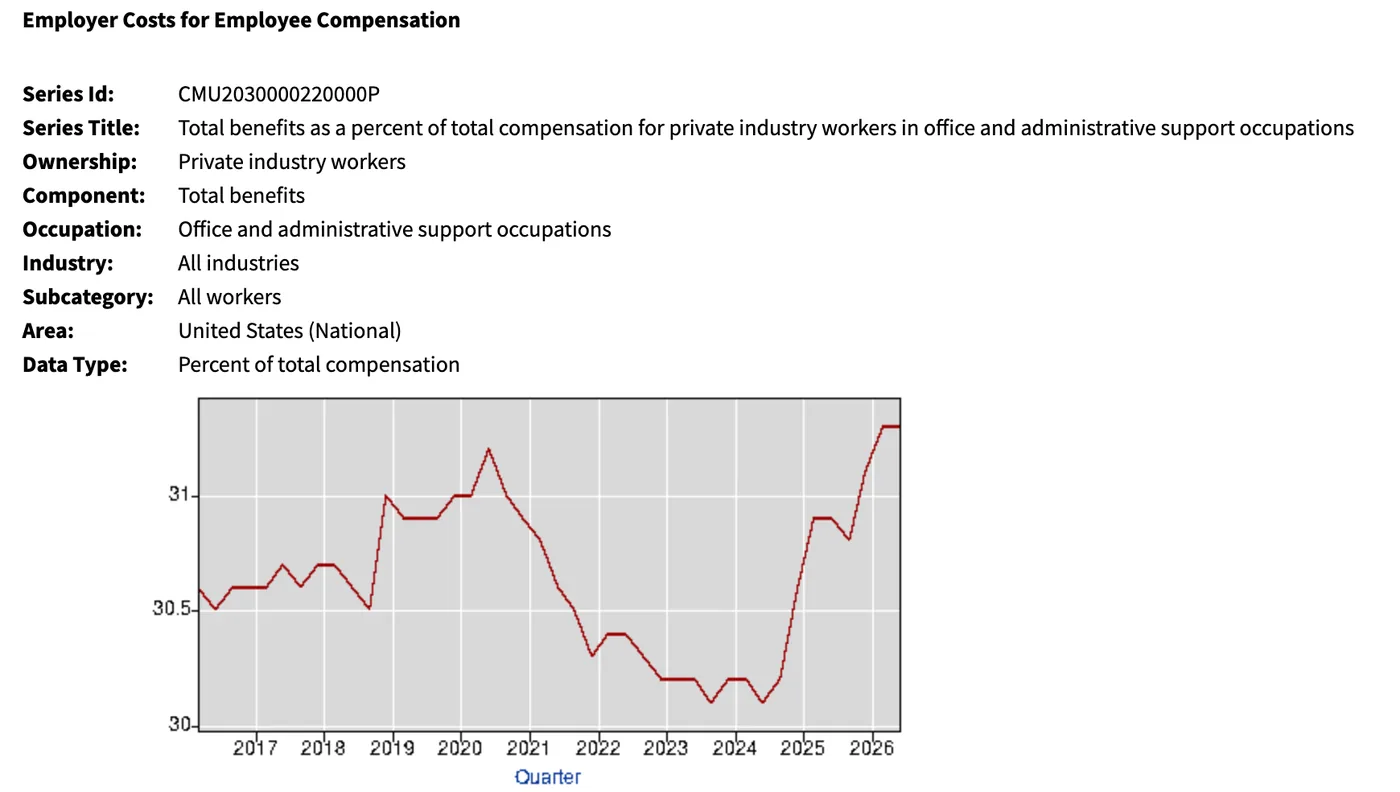
Dividing the median wage by that share gives the loaded cost: $38,010 divided by 0.687 is about $55,330 a year, or $4,611 a month. Spread over a standard 2,080 hour year (40 hours for 52 weeks), that is about $26.60 for every hour the receptionist is at the desk, or roughly 44 cents a minute, whether the phone is ringing or not.
This is a median, and it is a US one. Pay in your city, your sector and your country will differ, and O*NET lists health care and social assistance as the top industry for the job, where pay can sit above or below the middle. Swap in your own payroll number; the method stays the same.
A voice agent costs $0.14 to $0.17 a minute on published prices
Voice agent platforms price by the minute, and the minute is a stack of parts: speech recognition, the language model that decides what to say, the voice that says it, the platform's own fee and the phone line. Two platforms publish every part, which makes them useful for this math even if you never use either of them.
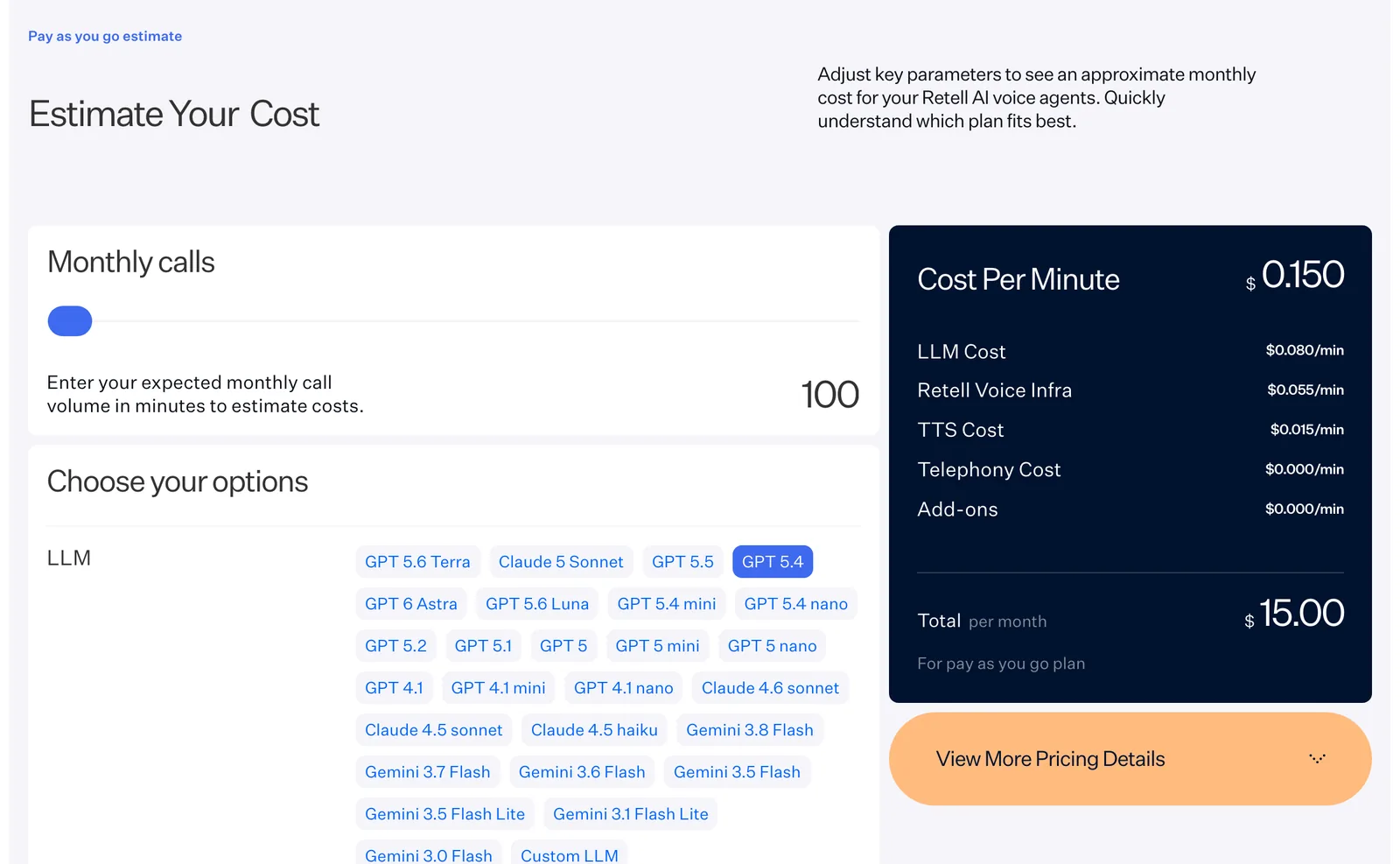
Retell AI's pricing page, checked on 23 October 2026, lists its voice infrastructure at $0.055 a minute, its standard text to speech voices at $0.015, telephony on its own US numbers at $0.015 and a phone number at $2 a month. The language model is priced separately. With GPT 5.4 selected, the page's calculator shows $0.080 for the model and $0.150 a minute before telephony, as in the screenshot at the top of this post. With the phone line added, that is $0.165 a minute.
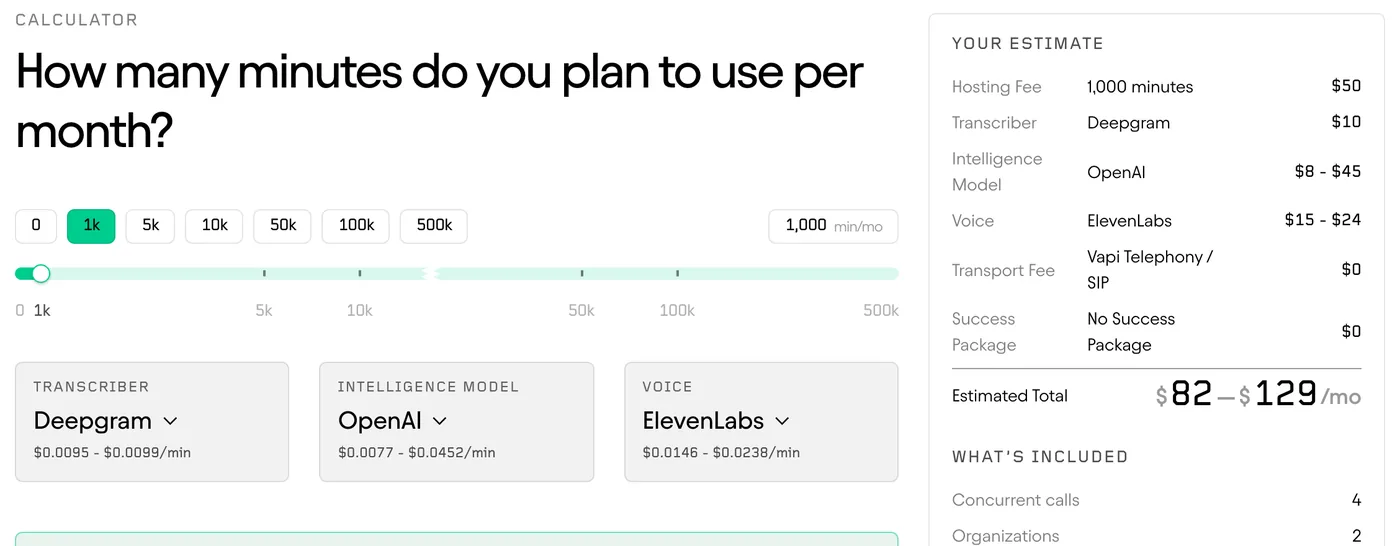
Vapi charges a $0.05 a minute hosting fee on its entry plan and passes the other providers through at cost. Its calculator lists Deepgram transcription at up to $0.0099 a minute, OpenAI models at up to $0.0452 and ElevenLabs voices at up to $0.0238. Taking the top of each range and adding Twilio's $0.0085 a minute for an inbound call to a US local number gives $0.1374 a minute.
Neither number includes the work of building the agent: writing the call flows, connecting the calendar and CRM, and testing it against real calls. That is a one off cost, and it is where most of the difference between a good agent and a bad one lives. GenovaFlow quotes it as a fixed price before any work starts.
Worked example: a clinic taking 600 calls a month
Here is the comparison for one example business. The call volume is an assumption, picked to be easy to check, and every price is linked.
- Calls: 600 a month at an average of 3 minutes each, so 1,800 minutes. This is the example's assumption, not a statistic.
- Receptionist: about $55,330 a year loaded, or $4,611 a month, from the BLS median wage and the benefits share above.
- Agent on Retell's prices: 1,800 minutes at $0.165 is $297.00, plus $2 for the number, so $299 a month.
- Agent on Vapi's prices: 1,800 minutes at $0.1374 is $247.32, plus a Twilio local number at $1.15, so about $248 a month.
At this volume the platform bill is about 5 to 7 percent of the receptionist's loaded cost, using the Retell and Vapi figures above. The more useful number is the break even: at $0.165 a minute, the usage bill only reaches $4,611 at about 27,900 minutes a month, which is 465 hours of talking. One receptionist is at the desk for about 173 hours a month (2,080 hours divided by 12), and only part of that time is spent on the phone.
That does not mean the agent replaces the person. It means the per minute price is rarely what decides the question. Coverage decides it: the agent answers in the 128 hours a week nobody is rostered for, and it answers the second, third and tenth call that arrive at the same moment. Retell's pricing includes 20 concurrent calls before it charges $8 a month for each extra one, and Vapi's entry plan allows 4, with more lines at $10 a month each.
The cost that is on neither invoice is the missed call
One argument from the original post still holds: the expensive line item is often neither the salary nor the agent, it is the call that rang out. You can price that for your own business with three numbers you already have. They are how many calls go unanswered in a week (your phone system's missed call report shows it), what share of answered enquiries turn into bookings, and what a booking is worth to you.
missed calls per week x booking rate x value of a booking x 52
= revenue at risk per year
We will not put a number on this for you, because no published source can. If the result is smaller than the platform bill, keep things as they are. If it is larger, the agent has a case, and the next question is where it should pass calls to your team, which is covered in when an AI agent should hand off to a human.
What the agent cannot do, and the rules it must follow
A receptionist's job is wider than the phone. The O*NET task list for the occupation includes greeting people as they arrive and directing or escorting them, receiving payments, sorting mail and deliveries, filing records and hearing complaints from the public. A voice agent covers the first item on that list, answering and routing calls, plus booking appointments into a calendar. It does not greet anyone at a front desk, take a card payment in person or sign for a parcel.
It also should not handle everything that comes down the line. A caller in distress, a complaint that needs judgement, a clinical question at a clinic: those go to a person, with the transcript attached. Our post on AI in healthcare covers where that line sits for clinics, and the handoff rules are the part of a deployment that deserves the most care.
Outbound calls carry legal limits too. In the US, the FCC's February 2024 declaratory ruling FCC 24-17 confirmed that AI technologies that generate human voices count as an "artificial or prerecorded voice" under the Telephone Consumer Protection Act. Calls that use them therefore need the called party's prior express consent unless an exemption applies. If you want the agent to make reminder or follow up calls, put consent in place first. This is not legal advice, so check the rules where you operate.
When a voice agent is worth deploying
Deploy one when calls arrive outside staffed hours, when they stack up at peak times, or when callers speak languages your team does not. Keep the receptionist, or hire one, when most of the value is in person: the front desk, payments at the counter, the regular who wants to talk to someone who knows them. The two also combine well. Our AI voice agents can run always on, overflow only (answering when your team does not pick up) or after hours only, on your existing numbers.
If customers also message you on WhatsApp, the same logic applies to chats, with Meta's 24 hour window as the main rule; that is in the post on multilingual WhatsApp agents and after hours bookings. For how the agent writes bookings into your calendar and CRM, see what plugs into your stack means. More posts like these are in AI agents for business.
Questions people ask
How much does an AI receptionist cost per month?
It depends on minutes, not seats. On prices published by Retell and Vapi and checked on 23 October 2026, a voice agent costs about $0.14 to $0.17 per minute of conversation, so 1,800 minutes a month comes to roughly $250 to $300 in usage plus a phone number. Building, testing and connecting the agent is a separate one off cost.
Is an AI receptionist worth it?
It is worth it when you lose calls: after hours, at peaks, or in languages your staff do not speak. A US receptionist costs about $55,330 a year with benefits on BLS figures, while the agent bills per minute, so the platform cost is rarely what decides it. Count your missed calls first. If they are rare, the case is weak.
Can AI replace a receptionist?
For phone work, largely: answering, routing, booking and taking messages. For the rest of the job, no. O*NET lists greeting and escorting visitors, receiving payments, handling mail and resolving complaints among receptionist tasks, and a voice agent does none of those in person. A practical split is the agent for calls and a person for the desk.
What is the difference between an AI voice agent and an IVR?
An IVR plays a menu and asks callers to press or say an option. A voice agent holds a conversation: it understands the request in the caller's own words, answers questions and takes actions such as booking a slot or updating a CRM. Zendesk's documentation for its voice AI agents describes them as replacing IVR menus with natural conversations.
Sources
- Receptionists and Information Clerks (43-4171.00), O*NET OnLine
- Employment Projections, occupation table, U.S. Bureau of Labor Statistics
- Benefits as a percent of total compensation, office and administrative support (CMU2030000220000P), BLS
- Pricing, Retell AI
- Pricing, Vapi
- Voice pricing for the United States, Twilio
- Declaratory Ruling FCC 24-17 on AI generated voices, Federal Communications Commission
- About voice AI agents, Zendesk help
Keep reading
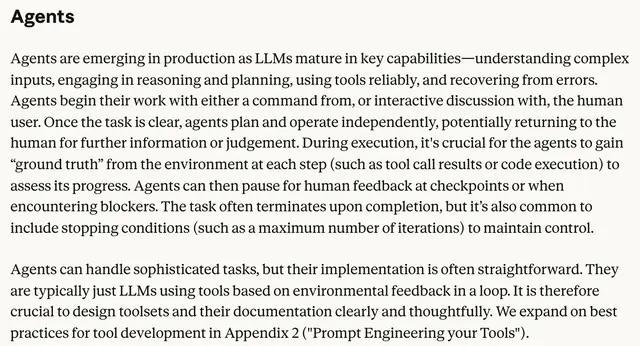
When should an AI agent hand off to a human?
Hand off when the agent keeps failing, when an action is risky or cannot be undone, or when the customer asks. What OpenAI, Anthropic and vendors say.
Read the post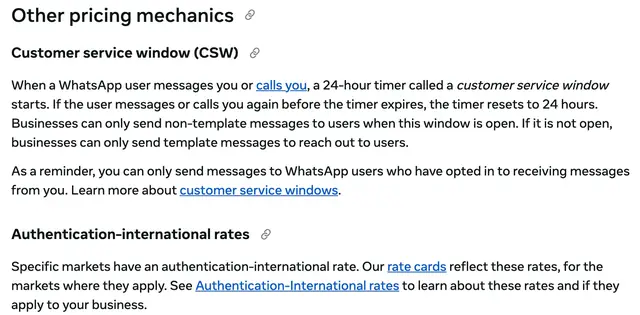
How multilingual WhatsApp agents capture after hours bookings
A WhatsApp agent can answer a 1am booking request in the guest's own language. How Meta's 24 hour window, templates and pricing shape that agent.
Read the post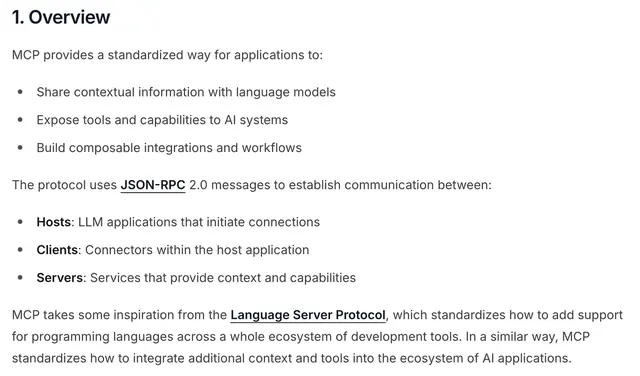
What "plugs into your stack" means for AI agents
APIs, webhooks, OAuth and MCP are how an AI agent reads, acts and writes back in your CRM, calendar and helpdesk. What each one does and what to ask.
Read the post