
What "plugs into your stack" means for AI agents
It means the agent can read, act and write back in your own tools
When a vendor says its AI agent "plugs into your stack", the claim should mean four concrete things. The agent calls your tools' APIs to read and change records, receives webhooks when something happens, gets access through OAuth with limited scopes instead of your password, and increasingly connects through the Model Context Protocol. Each is a published standard you can ask about by name.
The original version of this post boiled it down to three verbs, and they still work as a test. Read: can the agent see live context, such as the customer's history in the CRM or tomorrow's free slots? Act: can it do the thing, such as booking the slot or moving the deal stage, rather than suggest it? Write back: does the result land where your team looks, as a note on the ticket or a logged call? A chatbot that only reads is a search box, and one that cannot write back creates a second source of truth you will regret.
If you want to know what an agent could actually do inside your CRM and calendar, bring the list of tools you use. Book a call with GenovaFlow AI
APIs are how the agent reads and changes records
An API is the documented way one program asks another for data, or asks it to do something. HubSpot is a useful example because its documentation is public. Its API overview says every API sits under the same root path, https://api.hubapi.com/, and the current versions are named by date. Listing contacts looks like this:
GET https://api.hubapi.com/crm/objects/2026-09/contactsWhen an agent "reads from the CRM", this is what happens underneath: a request like the one above, made with a token the business granted. When it "updates the deal stage", it sends a write request to the same API. If a vendor cannot tell you which endpoints its agent calls and with which permissions, the integration may be little more than a CSV export with a better name.
Webhooks are how your tools tell the agent something happened
An API call is the agent asking. A webhook runs the other way: your tool sends an HTTPS request to an address the agent listens on the moment an event happens, such as a payment succeeding or a booking being cancelled. Stripe's webhook documentation is a clear reference. Stripe sends each event as a JSON payload over HTTPS, signs it so the receiver can check it really came from Stripe, and expects a quick 2xx response before any slow work starts.
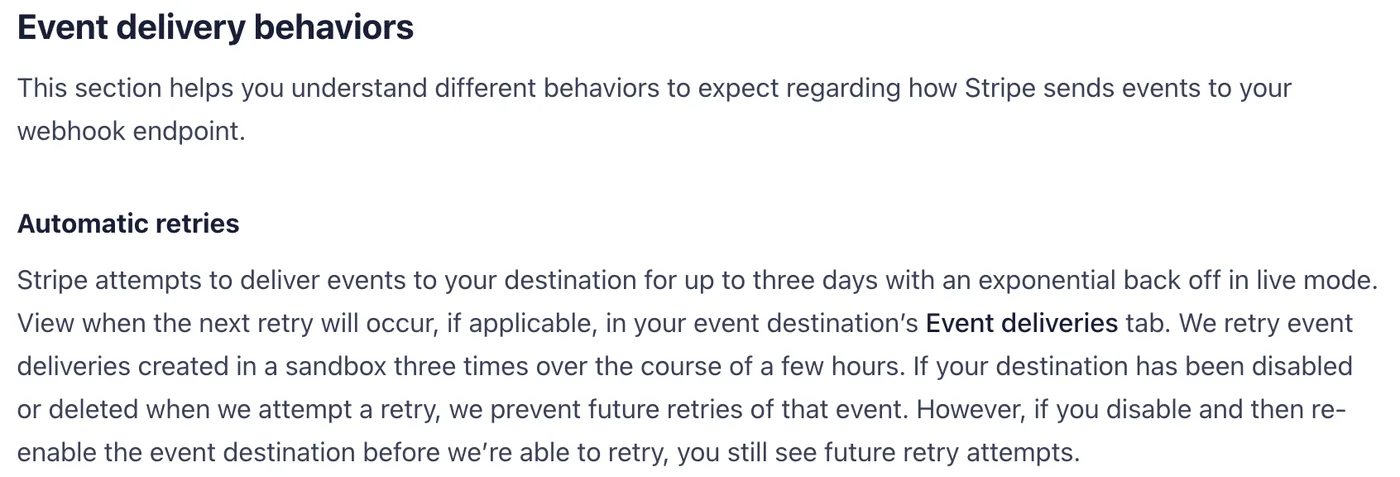
The details on that page are exactly the questions to put to any vendor. Stripe retries a failed delivery for up to three days in live mode, does not guarantee that events arrive in the order they happened, and can occasionally deliver the same event twice, so a receiver should log the event IDs it has processed and skip repeats. An agent that books a slot on every webhook without that check will, one day, book twice.
OAuth gives the agent a limited key, not your password
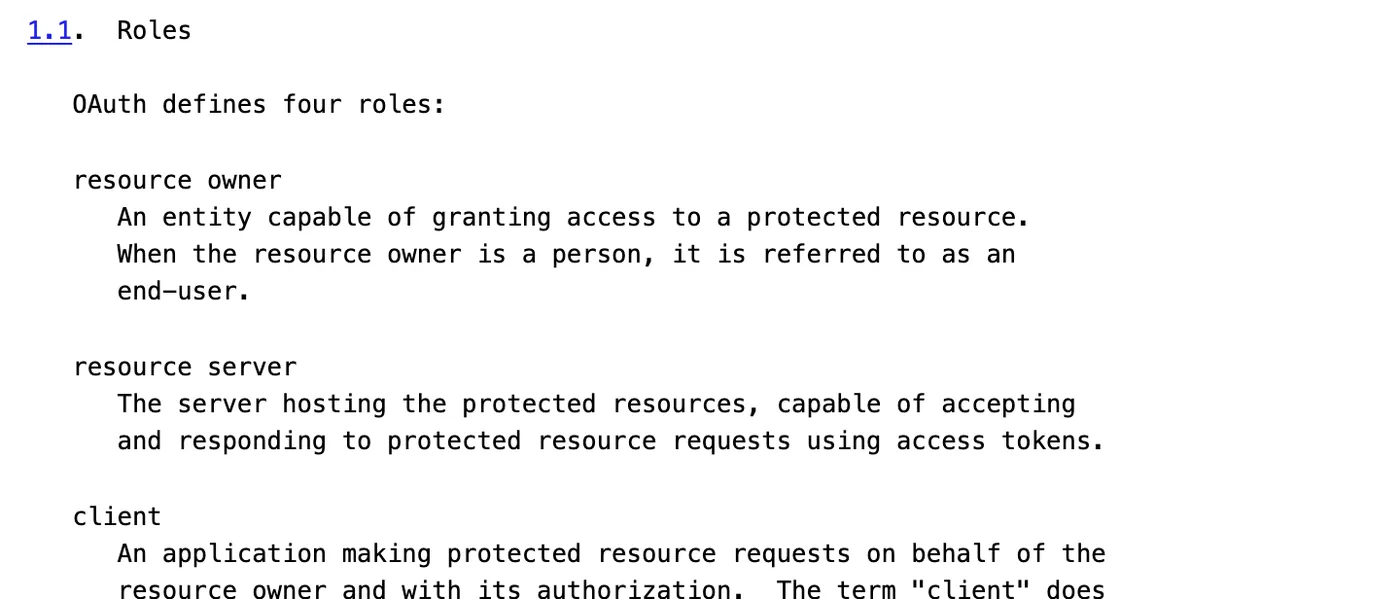
OAuth 2.0, defined in RFC 6749, is the standard that lets an application obtain limited access to a service on a user's behalf. The RFC names four roles: the resource owner (you, granting access), the resource server (the tool that holds your data), the client (the agent's application) and the authorization server, which issues access tokens once the resource owner has approved.
The word that matters to a business owner is scope. Scopes are the list of permissions a token carries, defined by the service, so that, as HubSpot's documentation puts it, an app might be allowed to read contacts but not delete them. When you connect an agent and a consent screen appears, read the scopes and grant the narrowest set the workflow needs. That is how our custom agentic systems are set up: least privilege access, explicit action boundaries and an audit log of every action.
MCP is a standard way to hand an agent its tools
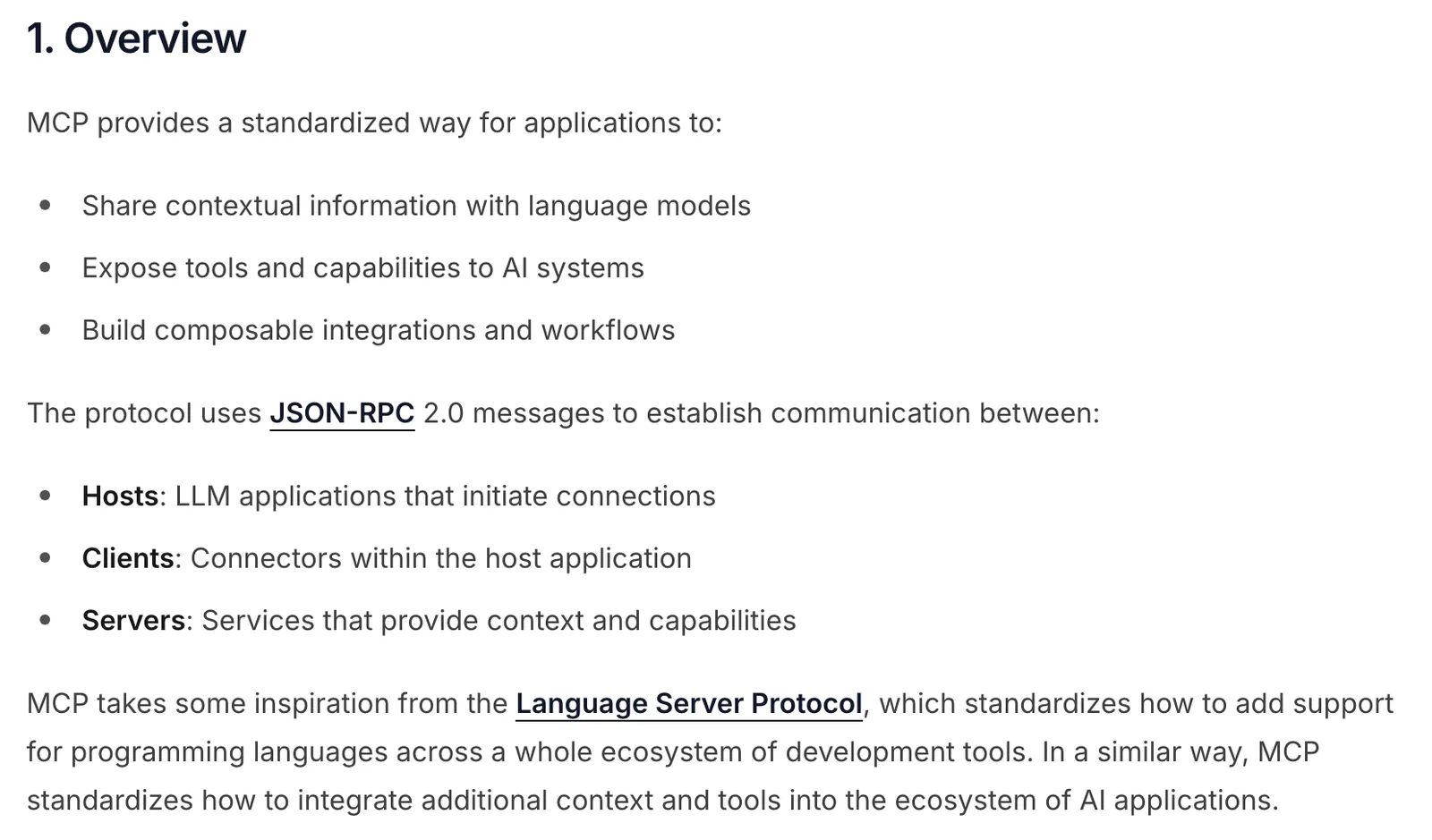
The Model Context Protocol is an open protocol for connecting AI applications to data sources and tools. The specification, in its 2026-07-28 version, describes three roles that exchange JSON-RPC 2.0 messages: hosts (the AI application), clients (the connectors inside it) and servers (the services that provide context and capabilities). Servers can offer resources, prompts and tools, and a tool is a function the model can call.
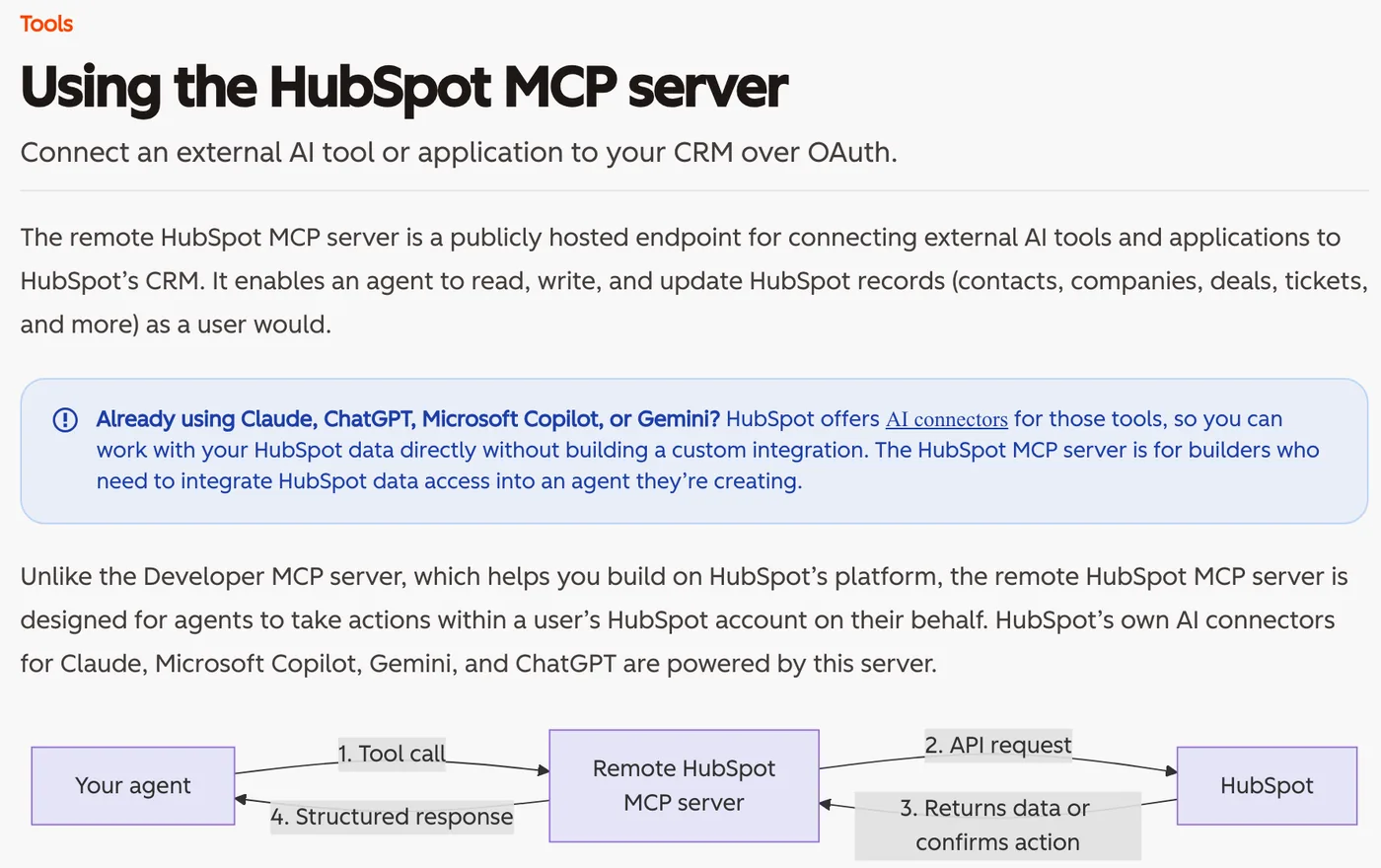
In practice MCP sits on top of the APIs above rather than replacing them. HubSpot's remote MCP server is a public example: the agent makes a tool call to the MCP server, the server makes the API request to HubSpot, and the result comes back as a structured response. HubSpot says it lets an agent read, write and update records such as contacts, companies, deals and tickets, and that the connection is made over OAuth.
For remote servers, the authorization section of the MCP specification builds on OAuth: a protected MCP server acts as an OAuth resource server, and the MCP client acts as an OAuth client, following the OAuth 2.1 draft. The specification's security principles also say hosts must obtain explicit user consent before invoking any tool, and that descriptions of tool behaviour should be treated as untrusted unless they come from a trusted server. That is the part to hold a vendor to. MCP makes connecting easy, so its permissions deserve the same scrutiny as any API key.
The long tail goes through an automation layer, not a migration
No vendor has a native connector for every tool, and anyone who claims one should be asked for the list. The honest setup is layered: direct API integrations for the systems the business lives in, such as the CRM, helpdesk and calendar, and an automation tool such as n8n, Zapier or Make for the long tail. Our post on AI automation tools for business operations compares that layer, and self hosting n8n on Google Cloud shows one way to run it on your own server.
The other half of the original argument also stands. A project that starts with "first, migrate everything to our platform" is slow, and the systems your team already knows are where the work happens. Your CRM, helpdesk, telephony and calendars stay where they are, and the agent works inside them with its own scoped access.
Five questions that test any integration claim
- Which API endpoints does the agent call, and with which OAuth scopes?
- Which events does it receive by webhook, and how does it handle retries and duplicates?
- Can you show the agent reading live data from our CRM, not from a demo account?
- Where does the data go, where does the agent run, and who owns the prompts and credentials?
- When an action fails, who finds out, and where is it logged?
The same questions apply to voice and chat. Our voice agents and chat agents pages list what each one writes back to the CRM. The cost side of the decision is in AI voice agent vs a human receptionist, and the escalation side in when an AI agent should hand off to a human. More posts are in AI agents for business.
Questions people ask
What is an MCP server?
A service that exposes tools, resources or prompts to an AI application through the Model Context Protocol. The AI application (the host) connects to it through a client, and the two exchange messages in the format the specification defines. A CRM's MCP server, for example, gives an agent tools to search, create and update records, and makes the underlying API calls itself.
What is the difference between MCP and an API?
An API is a specific service's interface: its endpoints, data formats and authentication. MCP is a common protocol for presenting tools and data to AI applications, so one agent can use many services the same way. An MCP server usually calls the service's API underneath, as HubSpot's MCP server does.
What is a webhook vs an API?
With an API, your system asks another system for data or tells it to act. With a webhook, the other system calls you when something happens, by sending an HTTPS request to an address you registered. Agents usually need both: webhooks to learn that a booking was cancelled, and API calls to act on it.
Is OAuth authentication or authorization?
Authorization. RFC 6749 calls OAuth 2.0 an authorization framework that lets an application obtain limited access to a service through access tokens. Identity is handled by OpenID Connect, which describes itself as a simple identity layer on top of the OAuth 2.0 protocol.
Sources
- Model Context Protocol specification, version 2026-07-28
- Authorization, Model Context Protocol specification
- RFC 6749, The OAuth 2.0 Authorization Framework, IETF
- Using the HubSpot MCP server, HubSpot Developers
- API overview, HubSpot Developers
- Receive Stripe events in your webhook endpoint, Stripe Docs
- OpenID Connect Core 1.0, OpenID Foundation
Keep reading
When should an AI agent hand off to a human?
Hand off when the agent keeps failing, when an action is risky or cannot be undone, or when the customer asks. What OpenAI, Anthropic and vendors say.
Read the post
AI voice agent vs a human receptionist: the cost math
A US receptionist costs about $55,330 a year with benefits; a voice agent bills $0.14 to $0.17 a minute. The math, with every input linked to its source.
Read the post
How multilingual WhatsApp agents capture after hours bookings
A WhatsApp agent can answer a 1am booking request in the guest's own language. How Meta's 24 hour window, templates and pricing shape that agent.
Read the post