
How large language models differ, and what to compare
Five things separate one language model from another
Large language models differ in five ways that matter once you pay for them: how much text they hold at once (the context window), how hard they think before answering (reasoning effort), whether they can call tools, which kinds of input they accept, and what they charge per token. Rankings change every few months; these five tell you which model fits a job. Every figure below comes from the vendors' own pages, checked on 23 October 2026.
That date matters more than usual. Anthropic's models overview lists four current Claude models and nine legacy ones still available, OpenAI's model catalog leads with three flagship models, and Google's models page runs to dozens of model codes across Gemini 4, 3 and 2.5. Any leaderboard you read is a snapshot. The dimensions underneath it hold still, so that is what this post explains.
Everything is measured in tokens, the chunks of text a model reads and writes. A token is not a word, and the ratio moves even inside one vendor: Anthropic says 1M tokens is roughly 555,000 words on its current tokenizer, while its models before Claude Opus 4.7 fit about 750,000 words in the same 1M tokens (Anthropic models overview). So compare token prices within a vendor freely, and across vendors with care. If you want the layer underneath all of this, start with how neural networks work.
If you are choosing a model for something you will run thousands of times, the right mix can change the bill more than any single setting. Book a call with GenovaFlow AI
The context window is working memory, and bigger is not always better
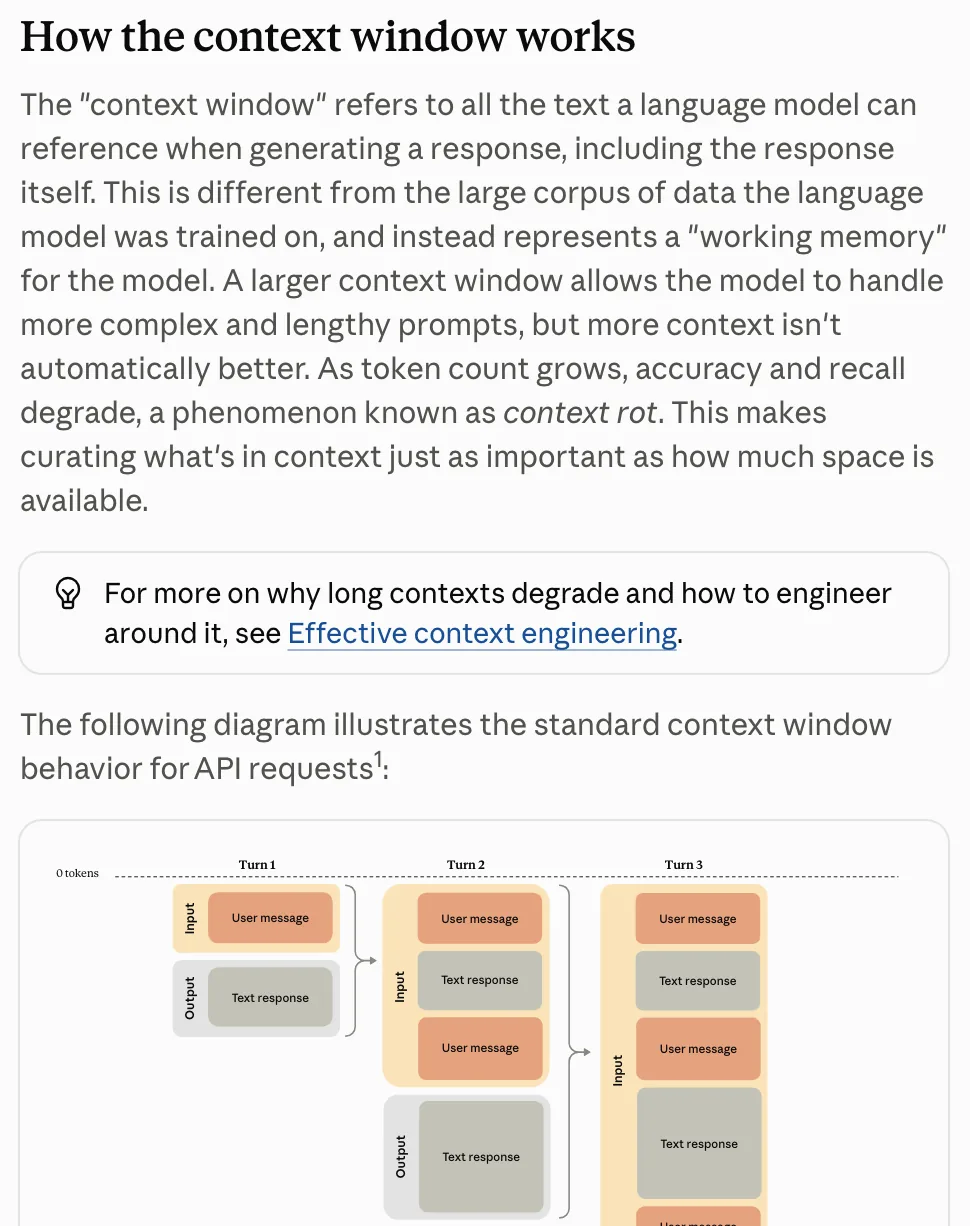
The context window is everything the model can see in one request: your instructions, the conversation so far, any documents and tool results, and the answer it is writing. Anthropic's context window docs describe it as the model's working memory, separate from the data it was trained on.
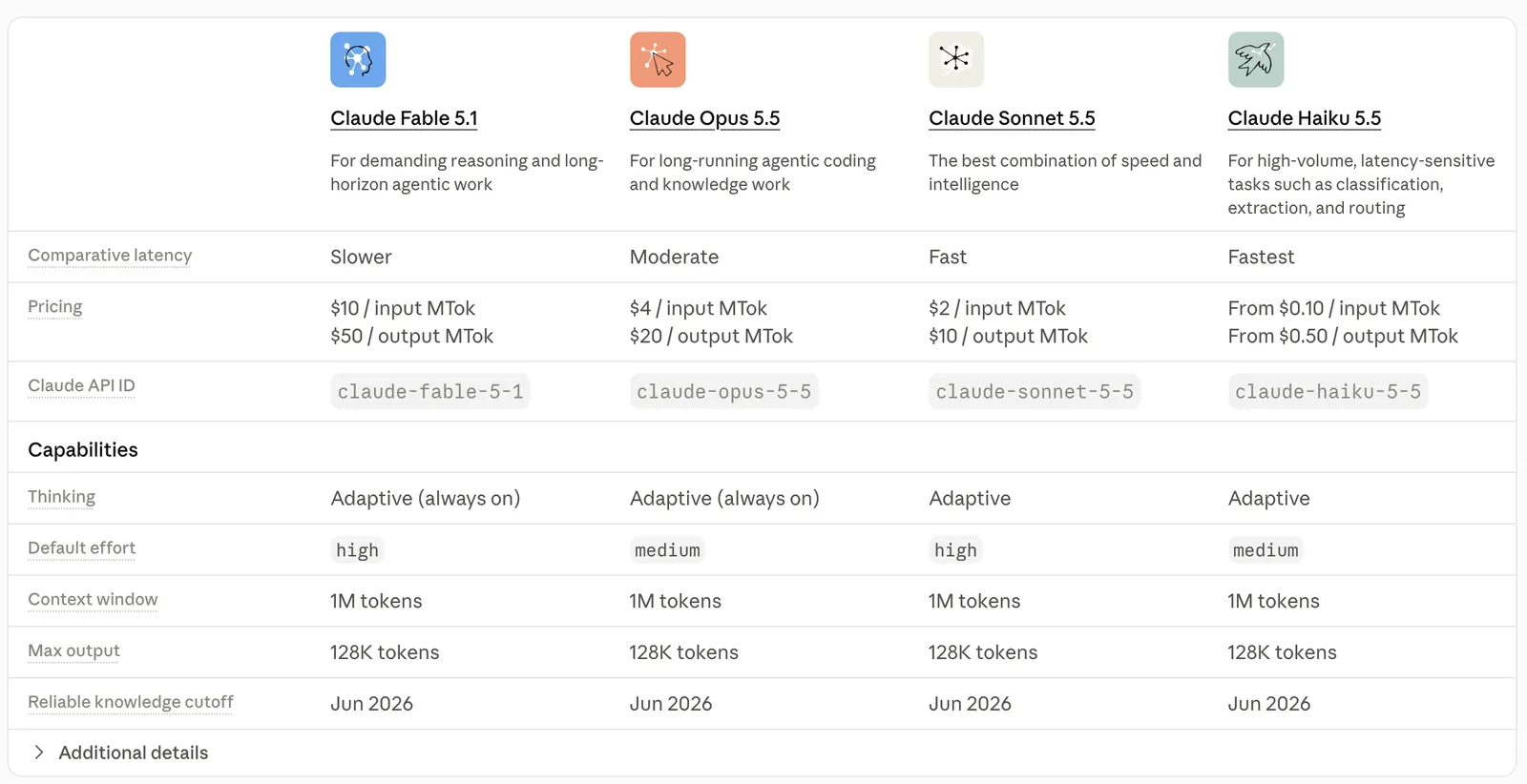
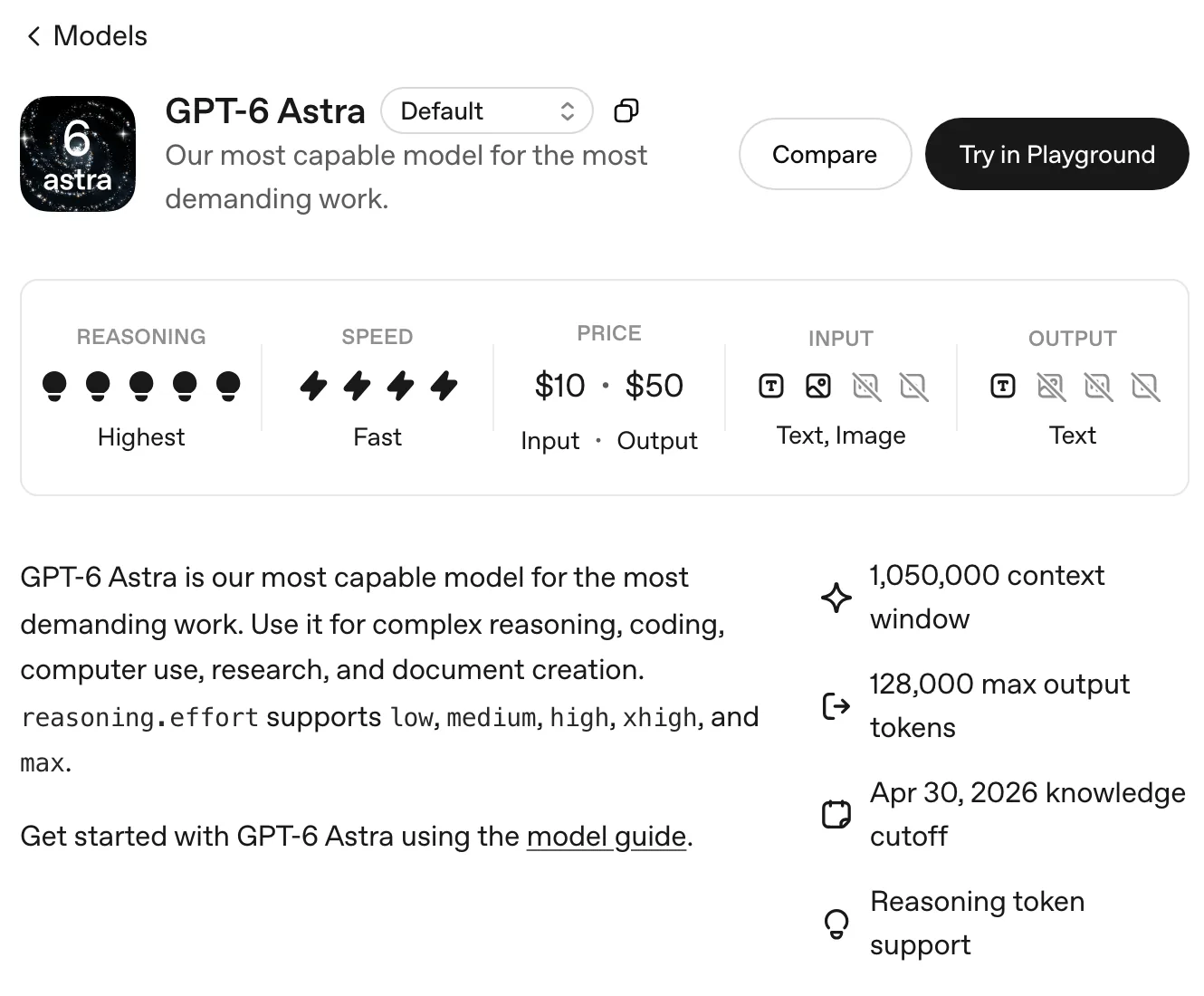
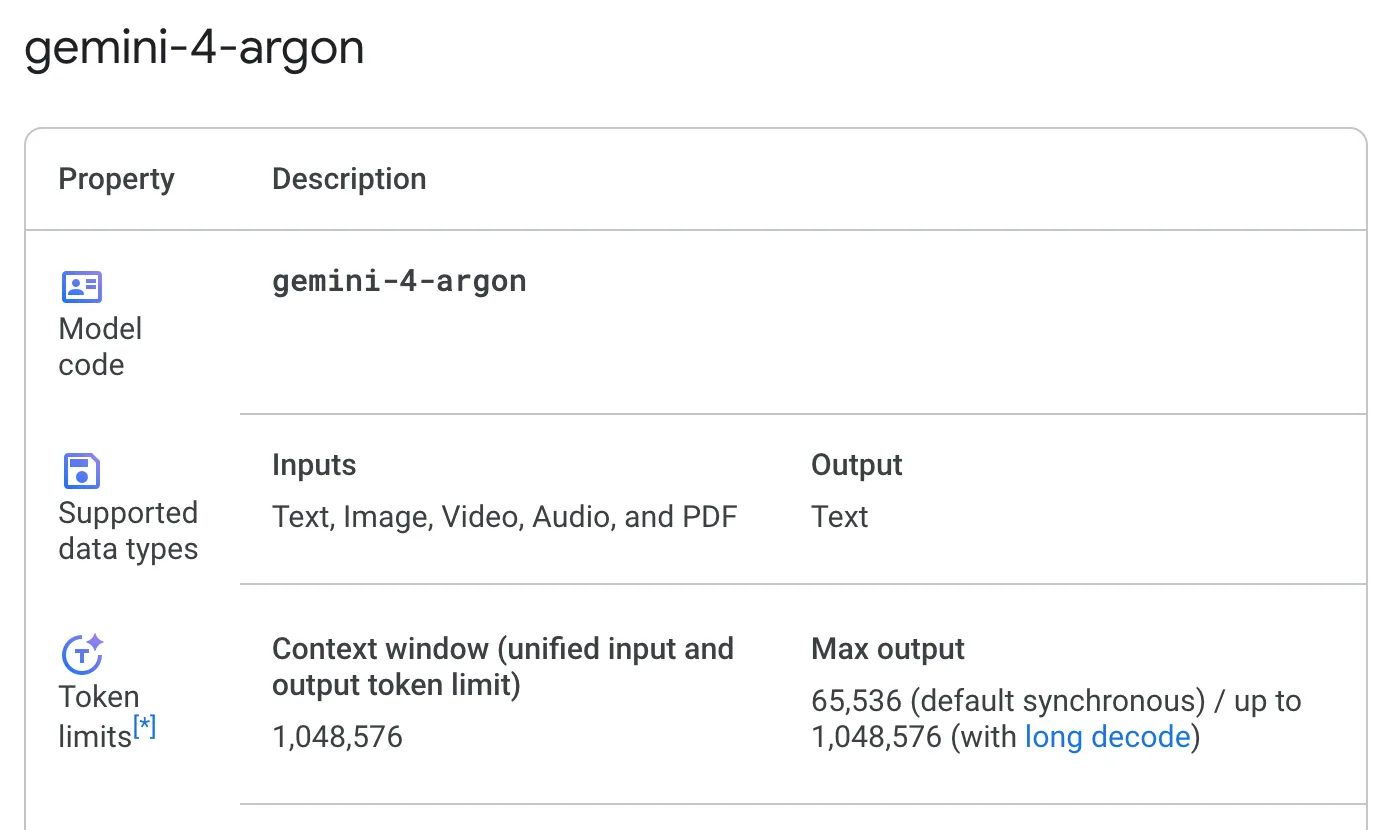
On paper the three vendors now look alike at the top. All four current Claude models have a 1M token window and write up to 128K tokens per request (Anthropic). GPT-6 Astra lists a 1,050,000 token window, of which at most 922,000 can be input, and 128,000 output tokens (OpenAI). Gemini 4 Argon has a 1,048,576 token window shared between input, thinking and output, with 65,536 output tokens by default and up to the full window in its long decode mode (Google).
Filling that window is a different matter. The same Anthropic page warns that as the token count grows, accuracy and recall degrade, which it calls context rot. Google's long context guide makes a related point: models score well when asked to find one fact in a long document, but accuracy drops when they have to find several at once.
Price can change with length too. Claude Haiku 5.5 charges more once a prompt passes 100,000 tokens, and OpenAI prices GPT-6 Astra prompts over 272K input tokens at 2x the input rate and 1.5x the output rate for the whole request (Anthropic pricing, OpenAI). That is why a smaller, curated context often beats a full one, and why retrieval augmented generation is still worth knowing about even with a 1M token window. In coding tools the same effect is what cutting Claude Code token usage is about.
Reasoning effort trades tokens for thinking
Current models can think before they answer, and all three vendors now let you set how much. Anthropic calls it effort, with levels from low to max; it applies to every output token, including tool calls and thinking, and Claude Opus 5.5 and Claude Haiku 5.5 default to medium while the other current models default to high (Anthropic effort docs). OpenAI exposes reasoning.effort, from low to max on GPT-6 Astra, with GPT-6 Luna also accepting none (Astra, Luna). Google lists thinking levels of low, medium and high for Gemini 4 Argon (Google).
The cost follows directly. Anthropic bills thinking tokens as output tokens, and Google's price table says its output price includes thinking tokens (Anthropic, Google pricing). Output is the expensive side of every price list below, so raising effort on a task that did not need it is one of the quickest ways to inflate a bill. Anthropic's own table suggests low for simpler tasks such as subagents and xhigh for long agentic coding runs.
Tool use and input types decide what a model can touch
Tool use is what lets a model act instead of only talk: it asks for a function by name, your code runs it, and the result goes back into the context. Every current Claude model supports text and image input, text output and tool use (Anthropic). OpenAI lists function calling plus hosted tools such as web search, file search, code interpreter, computer use and MCP for GPT-6 Astra (OpenAI). Google marks function calling, code execution, search grounding and computer use in preview as supported on Gemini 4 Argon (Google). This is the layer that AI agents are built on, and it is what plugging into your stack usually means in practice.
Inputs are where the vendors still differ most. GPT-6 Astra takes text and images and writes text. Gemini 4 Argon takes text, images, video, audio and PDF, and also writes text. If your work starts from call recordings or screen captures, that difference decides the shortlist before price does.
Price per token varies a hundredfold across the lineups
Prices are quoted per million tokens, with input and output priced separately. These are the standard API list prices on 23 October 2026; each one links to the page it came from.
| Model | Input / output, per million tokens | What the vendor says it is for |
|---|---|---|
| Claude Fable 5.1 | $10 / $50 | Demanding reasoning and long horizon agentic work |
| Claude Opus 5.5 | $4 / $20 | Long running agentic coding and knowledge work |
| Claude Sonnet 5.5 | $2 / $10 | Speed and intelligence together |
| Claude Haiku 5.5 | $0.10 / $0.50 (prompts up to 100,000 tokens) | High volume work such as classification, extraction and routing |
| GPT-6 Astra | $10 / $50 | OpenAI's most capable model |
| GPT-6.1 Sol | $2 / $10 | Close to Astra on complex work at a lower cost |
| GPT-6 Luna | $0.10 / $0.50 | Focused, high volume tasks |
| Gemini 4 Argon | $2 / $10 until 30 November 2026, then $4 / $20 | Google's flagship reasoning model |
gemini-3.5-flash-lite | $0.30 / $2.50 | High volume agentic tasks, translation, simple data processing |
The spread is the point. Claude Haiku 5.5 and GPT-6 Luna charge $0.10 per million input tokens, a hundredth of Claude Fable 5.1 and GPT-6 Astra at $10 (Anthropic, OpenAI). Discounts move the numbers again: Anthropic and OpenAI both price batch requests at half the standard rate, and repeated context read from a cache costs a fraction of fresh input (Anthropic models overview, OpenAI). Google has also published a price rise for Gemini 4 Argon on 1 December 2026, which is a good reason to date any figure you quote.
A worked example shows what that means per task. Take a job that reads 50,000 tokens and writes 5,000. On Claude Sonnet 5.5 at $2 and $10 per million, that is $0.10 of input plus $0.05 of output, about $0.15 a run (Anthropic prices). On Claude Haiku 5.5 the same run costs under a cent. Whether the cheaper model is good enough is the question only your own tests can answer.
Choose by testing on your own task, then step down
Benchmarks will not tell you how a model handles your documents, your customers or your codebase. OpenAI's guide to building agents gives a method that works for any vendor: build the first version with the most capable model to set a baseline, set up evals, then swap in smaller models wherever they still hit your accuracy target.
In practice that usually ends in a mix rather than one winner. A small model sorts and extracts, a mid tier model does most of the writing, and the expensive one is kept for the steps where it measurably earns its price. Anthropic's own advice on its models page is to start with Claude Opus 5.5 for most workloads and move up to Claude Fable 5.1 only when evals at higher effort still fall short.
This post sits in the AI explained series alongside the agentic AI explainer. For agents that run on these models in production, see the AI agents category, and if you want help choosing and wiring the right mix for your own work, that is part of our custom AI agents service.
Questions people ask
What is an LLM context window?
The context window is the total amount of text, measured in tokens, that a model can see in one request: instructions, conversation history, documents, tool results and its own answer. Anthropic describes it as the model's working memory, separate from its training data. Current flagship models from Anthropic, OpenAI and Google all list windows of about one million tokens on their model pages.
What is context window degradation?
It is the drop in accuracy as a prompt gets longer. Anthropic's context window docs say accuracy and recall degrade as the token count grows and call it context rot. Google's long context guide adds that finding several facts at once in a long input is harder than finding one. Curating what goes into the window often helps more than adding more.
What is the difference between an LLM and an AI agent?
An LLM is the model: it reads text and writes text. An AI agent is a system that puts an LLM in a loop with tools, so it can decide on an action, run it, read the result and continue until a task is done. The model is one part of the agent, as our agentic AI explainer shows step by step.
Which LLM is best for coding?
There is no lasting answer, because rankings change with each release. On their own pages, Anthropic positions Claude Opus 5.5 for long running agentic coding, OpenAI recommends GPT-6 Astra for complex reasoning and coding, and Google built Gemini 4 Argon for complex software engineering. Test two or three on a real task from your own codebase, as OpenAI's agent guide suggests, and compare cost per finished task.
Sources
- Models overview, Claude API docs (checked 23 October 2026)
- Pricing, Claude API docs
- Effort, Claude API docs
- Context windows, Claude API docs
- GPT-6 Astra model page, OpenAI API docs (checked 23 October 2026)
- GPT-6.1 Sol model page, OpenAI API docs
- GPT-6 Luna model page, OpenAI API docs
- Gemini 4 Argon model page, Google AI for Developers (checked 23 October 2026)
- Gemini API pricing, Google AI for Developers
- Long context, Gemini API docs
- A practical guide to building agents, OpenAI (PDF)
Keep reading
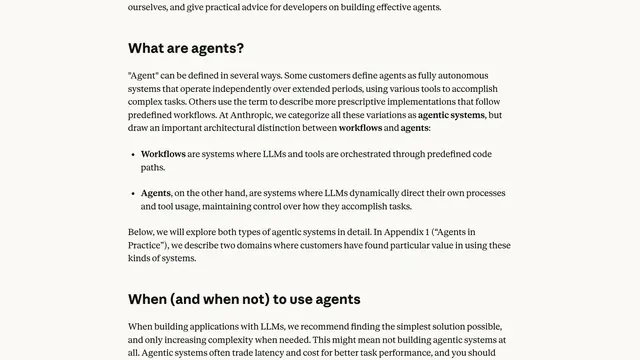
What agentic AI is and how it differs from a chatbot
Agentic AI is a model that picks its own next step and uses tools in a loop. How it differs from a chatbot or a workflow, with a worked example.
Read the post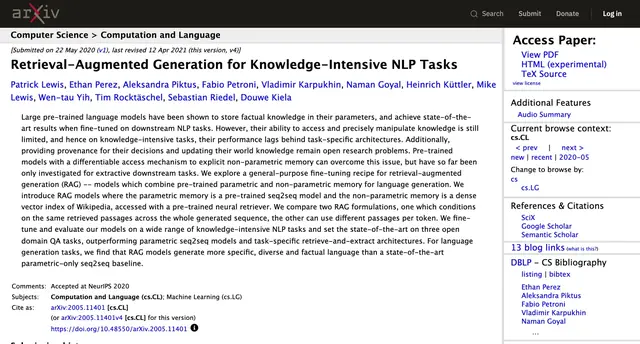
RAG explained: how retrieval works and when to use it
Retrieval augmented generation finds the right passages and puts them in the prompt. How it works, from the 2020 paper to vector search, and when to skip it.
Read the post
11 Fixes That Cut Our Claude Code Token Usage by 70 Percent
Two installs, rtk and caveman, and nine built in Claude Code habits took our session from 100 percent used to 20. Each fix, its command and why it saves tokens.
Read the post