
AI agents for small business: what they do and what they cost
An AI agent takes one job off your desk and costs cents a conversation
An AI agent in a small business is software that holds a conversation or works through a queue, then acts in the tools you already use: it answers customers on chat, WhatsApp and the phone, books and moves appointments, qualifies leads, chases follow ups and sorts the inbox. Running one costs cents per conversation or per minute of a call, and the safe way to start is one job, measured before and after.
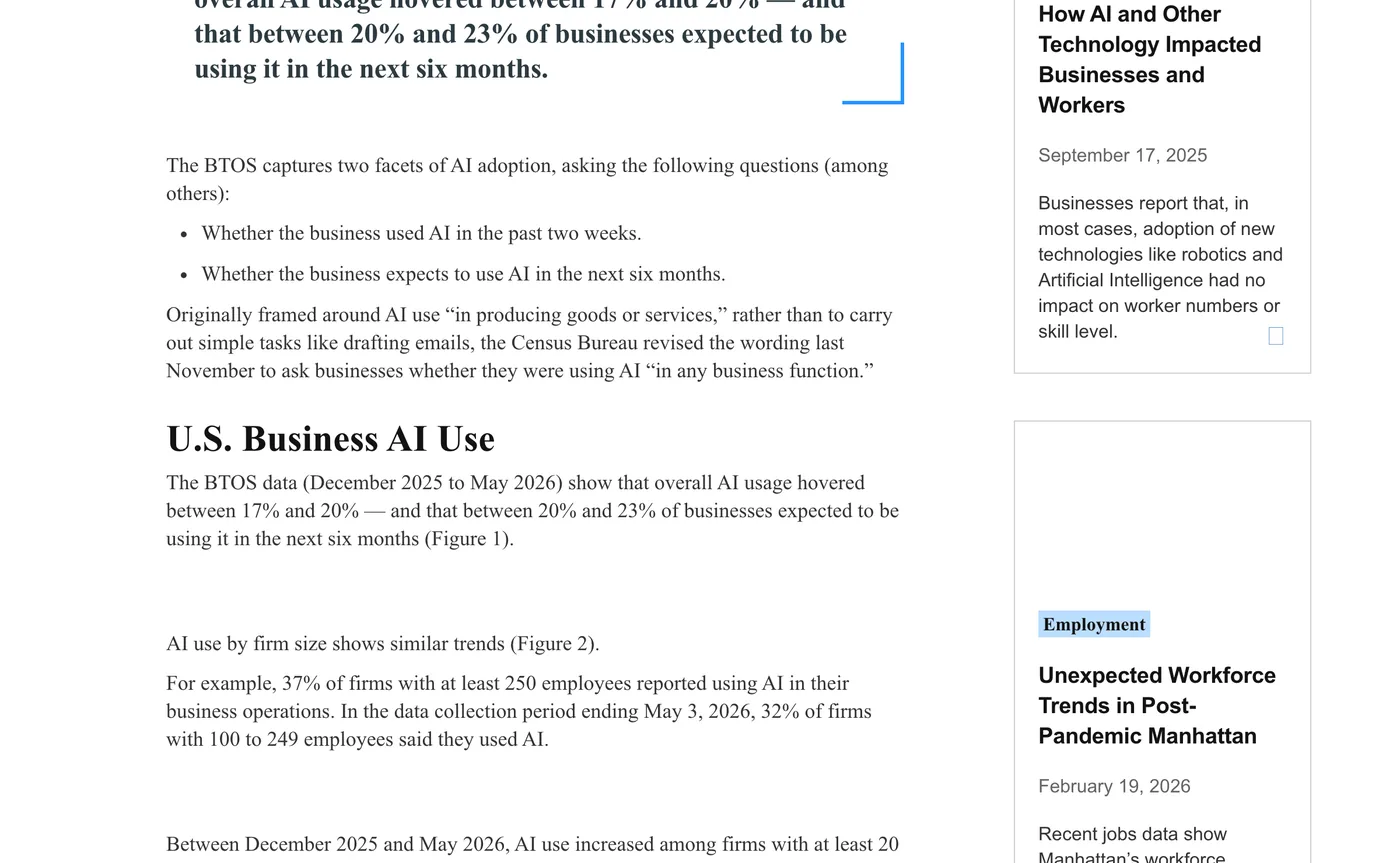
Most small firms have not started yet. The US Census Bureau's Business Trends and Outlook Survey found that AI use hovered between 17% and 20% of all businesses from December 2025 to May 2026. Fewer than 20% of firms with four or fewer employees reported using it, against 37% of firms with at least 250 employees, and use among firms with fewer than 20 employees did not change significantly over those months.
So the question for an owner is rarely whether AI agents are real. It is which job to hand over first, what it will cost to run, and what has to be true before customers talk to it. This guide answers those in order and links to the deeper posts in AI agents for business wherever one exists.
If you know where work is slipping but not which job to hand an agent first, we can work that out with you. Book a call with GenovaFlow AI
An agent chooses its next step, a workflow follows yours
The useful definition comes from Anthropic's engineering team. In Building effective agents they describe workflows as "systems where LLMs and tools are orchestrated through predefined code paths" and agents as "systems where LLMs dynamically direct their own processes and tool usage". A workflow follows the steps you drew. An agent is given a goal and a set of tools, and it works out the steps, such as which question to ask next or whether to check the calendar before replying.
The same article recommends "finding the simplest solution possible, and only increasing complexity when needed". For a small business that is practical advice: a reminder that goes out the day before every booking needs no agent at all, while a customer writing in with a question you did not predict does. A good builder will tell you which of your jobs is which. If you want the idea underneath before the business view, agentic AI and autonomous systems explains it.
Six jobs an agent takes in a small business
The jobs that suit an agent arrive as messages or calls, follow rules you can write down, and end in an action in a system you already run. Anthropic's appendix on customer support explains why that shape fits: support conversations "naturally follow a conversation flow while requiring access to external information and actions", and success can be measured by whether the request was resolved. Six jobs match that description in most small businesses.
Answering customers on chat, WhatsApp and the phone
This is the job most owners start with, because it is where enquiries go unanswered after hours. A chat agent replies in seconds on WhatsApp, web chat or Instagram, and a voice agent picks up the calls your team misses. On WhatsApp the agent works inside Meta's 24 hour customer service window, which multilingual WhatsApp agents and after hours bookings explains. GenovaFlow's AI chat agents and AI voice agents are built for these two channels.
Booking and rescheduling
An agent that books reads the open slots in your calendar or booking system, offers real times, writes the booking in and sends the confirmation. Rescheduling is the same job in reverse, and it is often the larger share of the work. Clinics are a good example of where the line sits, because booking and reminders are safe ground while anything clinical goes to staff, as AI agents in healthcare sets out.
Qualifying leads
The agent asks the questions your team would ask, such as budget, timing and what the customer needs, then writes the answers into the CRM so a person opens a qualified lead instead of a bare phone number. Brokerages run this pattern on portal and WhatsApp enquiries, which AI agents in real estate walks through, including the consent rules for calling leads back with an AI voice.
Follow ups on quotes, no shows and cold leads
Most pipelines leak where follow up stops, because nobody has time to chase a quote for the third time. An outreach agent sends the reminder, rebooks the missed appointment and stops the moment someone replies or asks to opt out. That is the job of GenovaFlow's AI outreach agents.
Inbox and document triage
An agent can read what lands in a shared inbox, sort it, attach it to the right record and draft a reply for a person to approve. Documents work the same way: in financial services the agent collects and checks onboarding files and an analyst makes the decision, as AI agents in financial services describes.
Internal lookups for your team
The quietest job is answering your own staff. "Where is this order", "when did we last invoice this client" and "is the van booked on Friday" are questions an agent can answer from the systems that already hold the answer. Work that spans several tools like this is usually a custom agentic system rather than an off the shelf chat agent.
It works inside your tools through APIs, webhooks, OAuth and MCP
An agent is only as useful as what it can read and change. Four standards do that work. An API is how the agent reads and updates records in your CRM, calendar or helpdesk. A webhook is how those tools tell the agent that something happened, such as a payment going through or a booking being cancelled. OAuth gives the agent a limited key with named permissions, called scopes, instead of your password, and the Model Context Protocol (MCP) is a newer standard way to hand an agent a set of tools.
The test for any vendor is three verbs: can the agent read live data from your systems, can it act rather than suggest, and does the result land where your team already looks? What "plugs into your stack" means for AI agents covers each standard with real documentation and the five questions to put to anyone selling you an integration. Grant the narrowest scopes the job needs, and keep your CRM, calendar and helpdesk where they are.
The running bill has three parts: model tokens, channel fees and upkeep
Running an agent costs the language model's tokens, the fees of the channel it talks on, and the time someone spends keeping it right. The first two are published by the vendors, so you can price them before you talk to anyone. The third depends on the build and is the one to ask about.
Model tokens
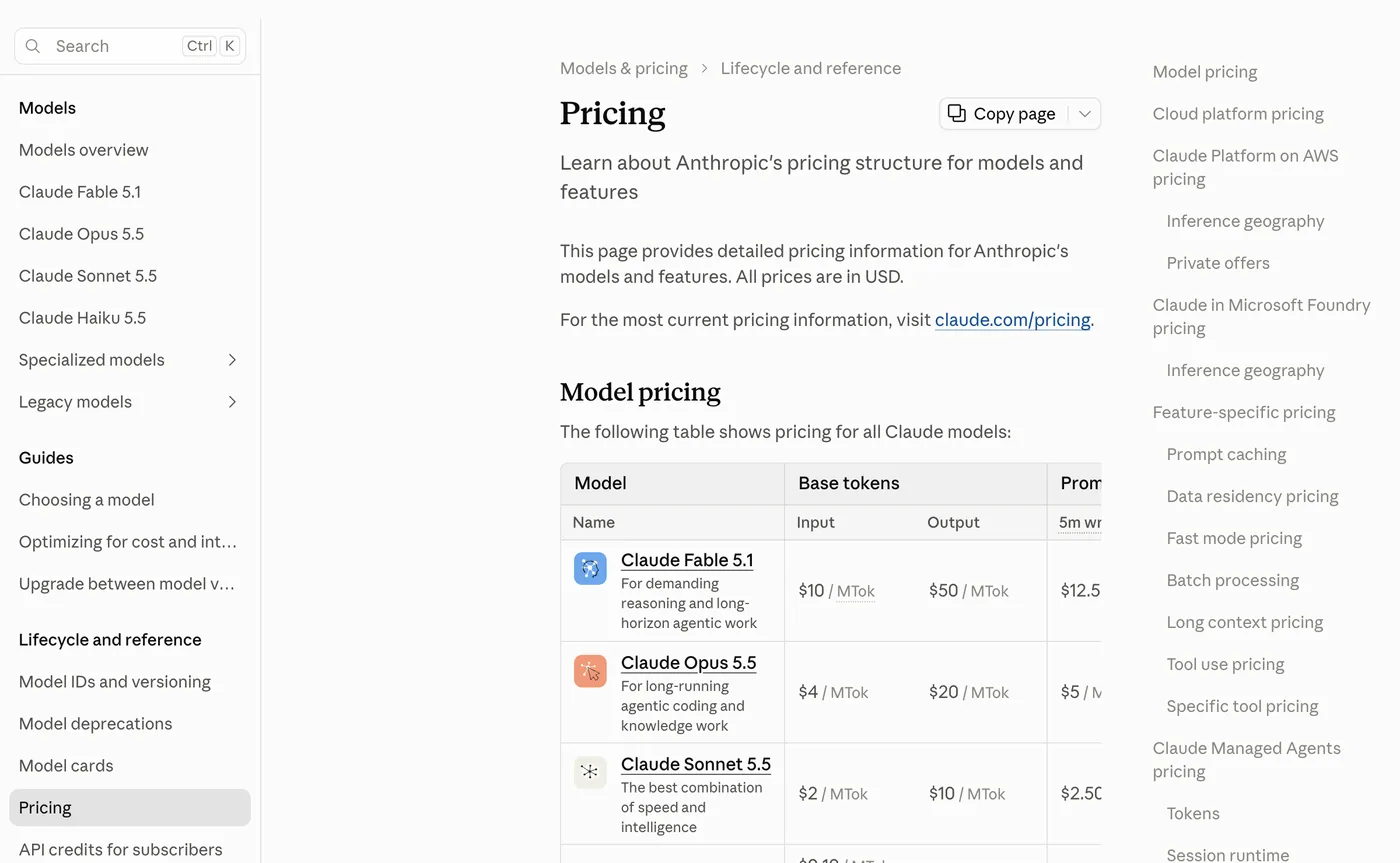
Models are billed per million tokens, roughly the words the model reads and writes. On Anthropic's pricing page, Claude Haiku 5.5 costs $0.10 per million input tokens and $0.50 per million output tokens for prompts up to 100,000 tokens, and Claude Sonnet 5.5 costs $2 and $10. As an example, if one customer conversation has the model read 20,000 tokens in total (instructions, history and lookups) and write 1,000, it costs about $0.0025 on Haiku 5.5 and $0.05 on Sonnet 5.5. The token counts are our assumption for the example; the prices are Anthropic's.
Channel fees
WhatsApp is billed by Meta per delivered message, a model in place since July 1, 2025, at a rate that depends on the message category and the country code of the person receiving it, according to Meta's pricing documentation. Messages customers send you are not charged. Replies inside the customer service window are service messages, and since October 1, 2026 each business phone number gets 1,000 of them free a month, with Meta charging from the next one. The per country rates sit in Meta's rate cards, and the after hours post above covers templates and the window in detail.
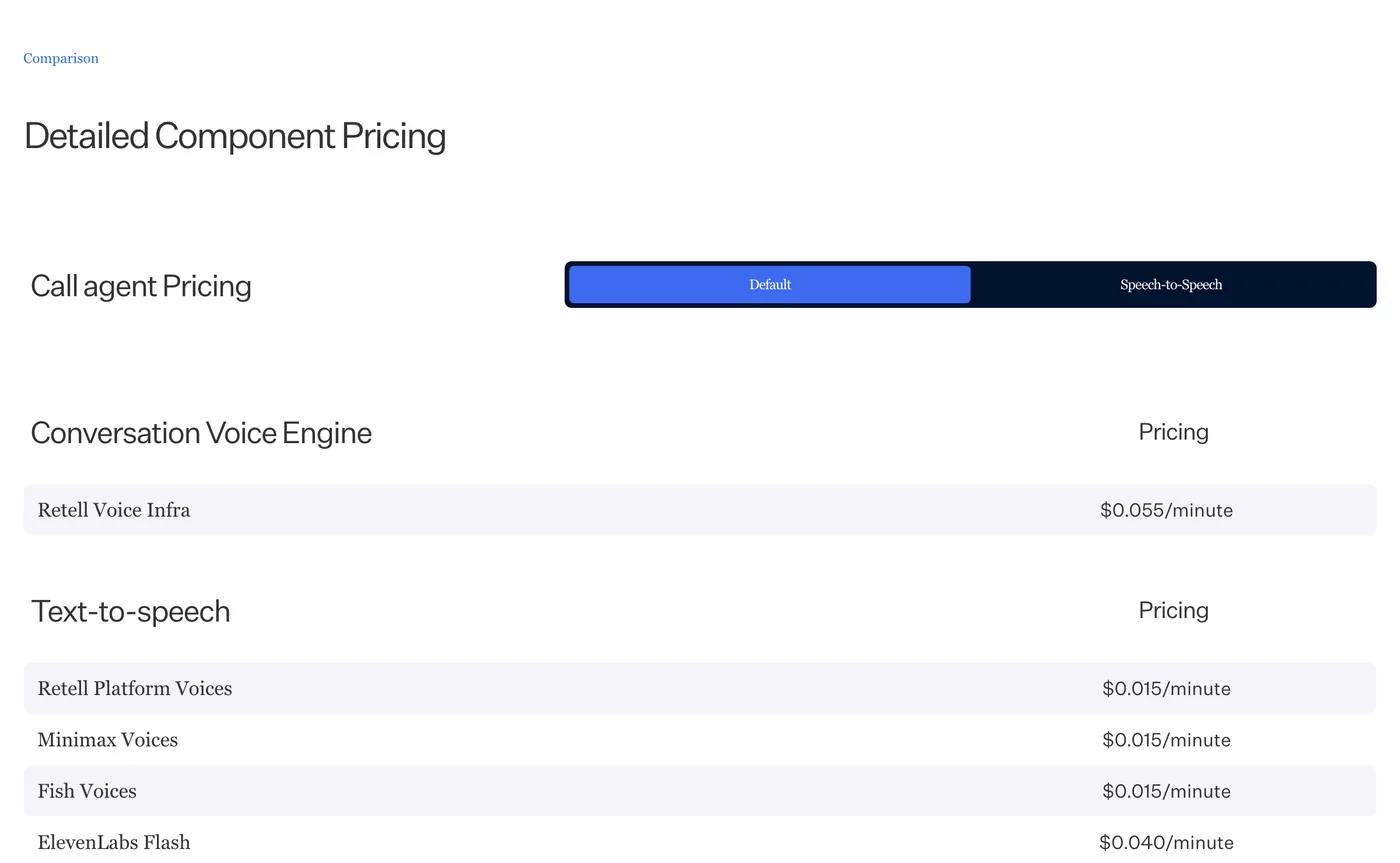
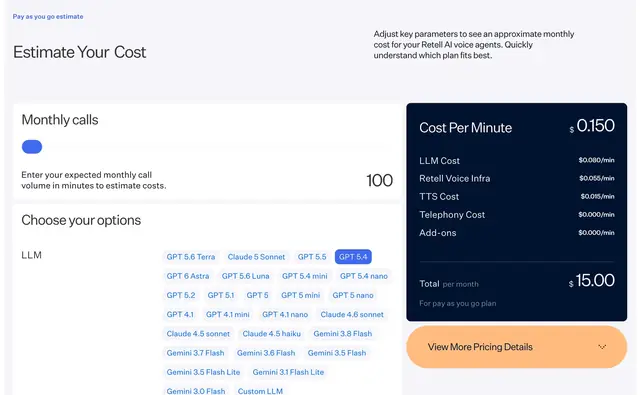
Voice is billed per minute, as a stack of parts. Retell AI's pricing page lists its voice infrastructure at $0.055 a minute, its platform voices at $0.015, telephony at $0.015 and Claude 4.5 Haiku as the model at $0.025, so a call on that setup runs about $0.11 a minute. If you bring your own line, Twilio's US voice pricing charges $0.0085 a minute to receive calls on a local number and $1.15 a month for the number. AI voice agent vs a human receptionist runs the full monthly math for a clinic taking 600 calls a month.
Build and upkeep
The setup work is writing the scope and handoff rules, connecting the systems, and testing on real conversations. After launch someone reads transcripts, updates the agent's knowledge when your prices or opening hours change, and adds rules where it got something wrong. Ask any builder who does that work, how often, and what it costs, because it decides whether the agent keeps up with your business.
The risks are wrong answers, dead ends, undisclosed bots and loose data
Agents make mistakes, and the people who build them say so plainly. Anthropic's Building effective agents warns that "the autonomous nature of agents means higher costs, and the potential for compounding errors", and recommends extensive testing in sandboxed environments with guardrails. The same article describes the controls that keep an agent honest: it checks real results from your systems at each step, pauses for human feedback at checkpoints or when it gets stuck, and stops after a set number of attempts.
The dead end is the failure customers notice most: an agent that cannot help and will not let them reach a person. Write the handoff rules before launch. Hand off when the agent fails twice on the same request, before any risky or irreversible action such as a refund, and the moment the customer asks for a person, with the full conversation passed along. When an AI agent should hand off to a human sets out those triggers with the vendors' and regulators' own wording, including the EU's disclosure rule.
Disclosure and consent apply to voice in particular. In Declaratory Ruling FCC 24-17, adopted on February 2, 2024, the US Federal Communications Commission confirmed that the TCPA's restrictions on an "artificial or prerecorded voice" cover AI technologies that generate human voices, so calls made with one need the prior express consent of the person called unless an exemption applies. Inbound calls are a different matter, but an agent that calls leads back is covered by that ruling.
Data is the last risk, and the simplest to check. Know what the agent can see, where conversations are stored, and which companies sit behind it: the model provider, the channel provider and the host. Ask each whether your data trains its models. Anthropic, for example, says on its privacy center that by default it does not use inputs or outputs from its commercial products, the API included, to train its models. Regulated work adds its own layer, such as a business associate agreement for a clinic under HIPAA.
Start with one job, a baseline and a written handoff rule
The owners who get value from an agent start small and measure. One job, one channel and a number taken before launch tell you more in a month than a broad rollout tells you in a year. This order works for most small businesses:
- Pick one job with volume and written rules, such as after hours WhatsApp enquiries, missed calls or unanswered quotes.
- Measure the baseline for two weeks before anything changes: missed calls, first response time, bookings made and staff hours spent on the job.
- Write the scope and the handoff rule: what the agent may do alone, what always goes to a person, and who receives it out of hours.
- Connect the agent to the one system the job needs, with the narrowest access that works.
- Run a pilot on one channel and read every transcript for the first weeks.
- Compare the result with the baseline, then decide whether to widen it or add the next job.
That pattern of one measured task at a time is also how larger companies end up using AI across their work, as the surveys in companies using AI in every task show. If the first job pays for itself, the second one is easier to judge, because you already have the method and the numbers.
Questions people ask
What is the best AI agent for small business?
The best one is the agent built for the job you hand it, connected to the calendar, CRM or inbox that job already uses, with written handoff rules and a log you can read. A general chatbot that cannot book, look up an order or pass a conversation to your team will answer questions and change nothing. Judge any product by the job, the connections and the handoff, not by the model inside it.
How can AI help small businesses?
Mostly by taking repetitive, rule based work off people: answering customer messages and calls after hours, booking and rescheduling, qualifying leads, chasing quotes and no shows, sorting the inbox and answering staff questions from your own systems. The gain shows up as fewer missed enquiries and fewer hours on routine work, which is why it pays to measure both before you start.
Is an AI voice agent worth it for a small business?
It is worth it when calls arrive outside staffed hours or stack up at busy times, and the calls are routine: bookings, opening hours, directions, rescheduling. On Retell AI's published prices a call runs about $0.11 a minute with a small model. Compare that with what your missed calls cost you, and keep a person for anything that needs judgement.
What are AI agent use cases for small businesses?
The common ones are a WhatsApp or web chat agent that answers and books, a voice agent that picks up missed calls, a lead qualifier that writes answers into the CRM, an outreach agent that follows up on quotes and no shows, inbox triage that drafts replies for approval, and an internal assistant that looks up orders, invoices and bookings for staff.
Sources
- Building effective agents, Anthropic
- Large Firms With at Least 20 Employees Biggest AI Users, US Census Bureau
- WhatsApp Business Platform pricing, Meta for Developers
- Pricing, Claude API documentation, Anthropic
- Pricing, Retell AI
- Voice pricing for the United States, Twilio
- Declaratory Ruling FCC 24-17 on AI voices and the TCPA, Federal Communications Commission
- Is your data used for model training? Anthropic Privacy Center
Keep reading
AI voice agent vs a human receptionist: the cost math
A US receptionist costs about $55,330 a year with benefits; a voice agent bills $0.14 to $0.17 a minute. The math, with every input linked to its source.
Read the post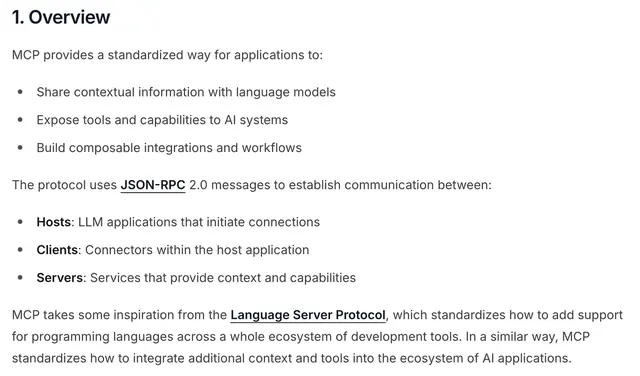
What "plugs into your stack" means for AI agents
APIs, webhooks, OAuth and MCP are how an AI agent reads, acts and writes back in your CRM, calendar and helpdesk. What each one does and what to ask.
Read the post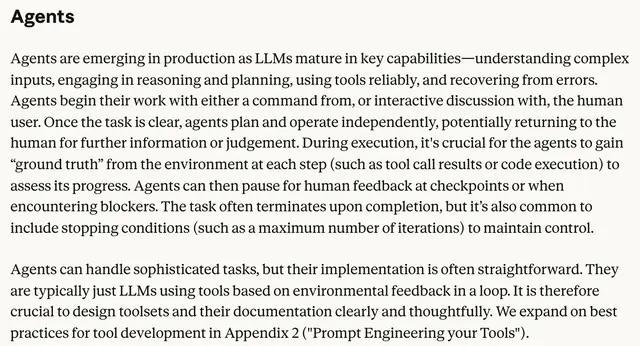
When should an AI agent hand off to a human?
Hand off when the agent keeps failing, when an action is risky or cannot be undone, or when the customer asks. What OpenAI, Anthropic and vendors say.
Read the post